

perissodactyl
- noun
- /pəˈrɪsəˌdæktɪl/
- Specialized
- Scientists study perissodactyl fossils to learn more about the evolution of hoofed animals.
Examples
-
The rhinoceros is a large perissodactyl known for its thick skin and impressive horn.
-
But what was he to do with this monstrous perissodactyl?
Fiction book (1999) -
"thick-skinned perissodactyl mammals...
-
Horses, tapirs, and rhinoceroses are examples of perissodactyl mammals that have an odd number of toes.
Synonyms
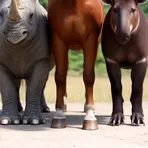
A mammal with hooves and an odd number of toes, like a horse or rhino

An animal with hooves and an odd number of toes, like horses or rhinos
Compounds
- Specialized
A mammal with hooves and an odd number of toes, like a horse or rhino
Surface Forms
Morphology
Etymology
Perissodactyl comes from Greek parts perissos meaning 'odd' and dactyl meaning 'toe' or 'finger', so it literally says 'odd-toed'. That's why animals like the horse, rhinoceros, and tapir are called perissodactyls — they have an odd number of toes on each foot.

