
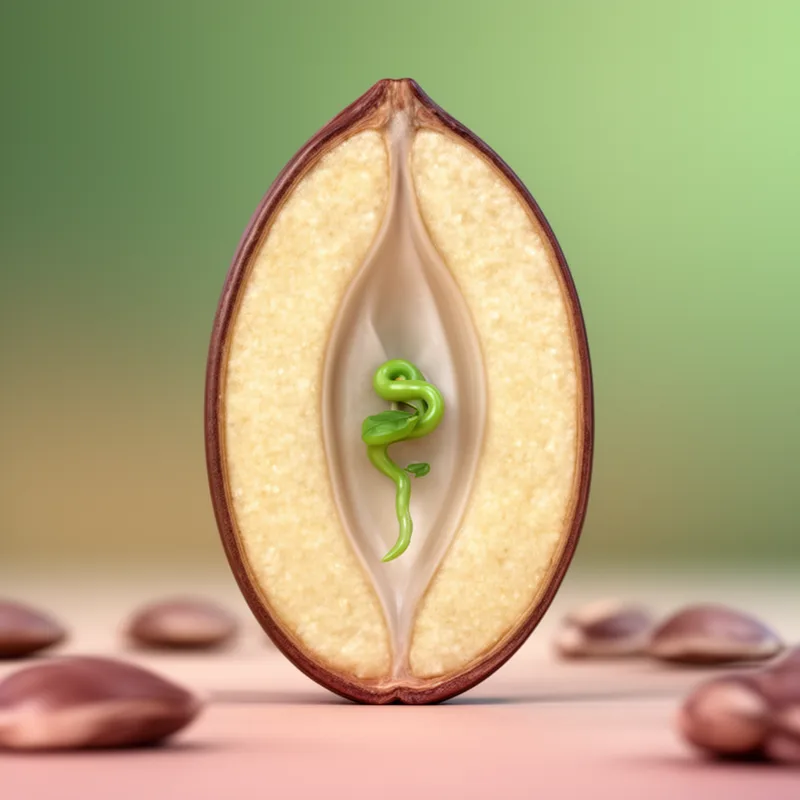
perisperm
- noun
- /ˈpɛrɪˌspɜrm/
- Specialized
- The perisperm provides additional nutrients for the developing seedling in some plant species.
Examples
-
In certain seeds, the perisperm can constitute the main storage tissue, replacing the endosperm.
-
Unlike endosperm, perisperm originates from the nucellus tissue in the seed.
-
The perisperm provides essential nutrients to the developing seed.
-
In many plants, the perisperm is crucial for seed viability.
-
In certain seeds, the perisperm serves as the main storage tissue, supplying nutrients to the embryo.
-
The perisperm acts as a source of nourishment for the growing seedling during its early development.
-
Unlike other seed tissues, the perisperm is derived from the nucellar tissue, providing essential nutrients.
Surface Forms
Morphology
Etymology
The word perisperm comes from the Greek parts peri- meaning 'around' and sperm meaning 'seed'. You can see peri- in perimeter, which also means 'around'. So perisperm is the part 'around the seed' that feeds the young plant.

