

perishableness
- noun
- /ˈpɛrɪʃəblnəs/
- The perishableness of fruits makes them difficult to store.
Examples
-
Scientists study the perishableness of organic materials to extend their shelf life.
-
The perishableness of fresh produce requires careful storage and fast distribution.
-
Packaging has improved to reduce the perishableness of dairy products.
-
The perishableness of dairy products requires careful handling.
-
The perishableness of fresh fruits means they must be consumed quickly.
-
Farmers are aware of the perishableness of their crops during harvest season.
-
The perishableness of certain foods requires careful storage to prevent spoilage.
Synonyms

How quickly food or other items go bad
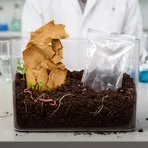
How easily something breaks down naturally over time

How easily something can be broken or ruined
Antonyms


How Perishable

Surface Forms
Morphology
perishableness = perishable (transparent) = perish + able + ness
Formed by adding the standard noun-forming suffix '-ness' to the adjective 'perishable', yielding a quality/state noun.
Etymology
The word perishableness comes from the verb perish, which means 'to die or decay', plus the ending -able ('can be') and -ness ('state or quality'). So perishableness is the quality of being likely to spoil or be destroyed, a handy word for food or materials that do not last long.