
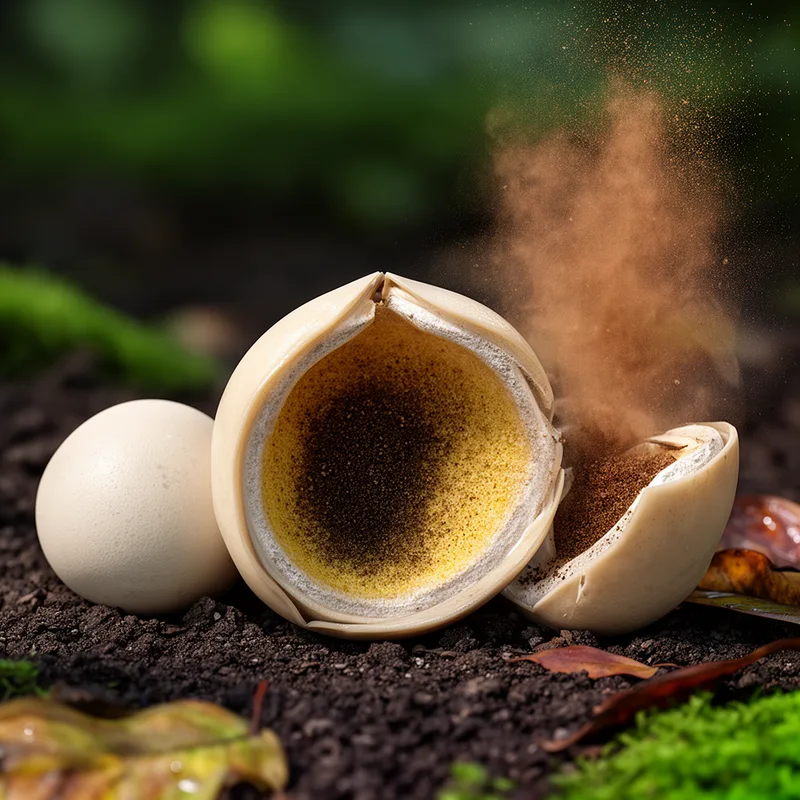
peridium
- noun
- /pəˈrɪdiəm/
- Specialized
- The peridium protects the developing spores until they are ready for release.
Examples
-
When the peridium breaks open, spores are dispersed into the environment.
-
Some puffballs have a tough peridium that splits at maturity.
-
The peridium protects the spores from environmental damage.
-
Some fungi have a thick peridium that helps in spore dispersal.
-
The peridium surrounds the spores and helps them to survive until they are ready to germinate.
-
When the peridium is disturbed, it reveals the spores inside that are waiting to be released.
-
The structure of the peridium varies among different fungal species, influencing how their spores are dispersed.
Surface Forms
Etymology
The word peridium comes from Greek parts peri- meaning 'around' and -idion meaning 'small'. So a peridium is like a small cover 'around' something, which fits because it is the outer layer that surrounds and protects a fungus's spores.

