
perichondrium
- noun
- /ˌpɛrɪˈkɒndriəm/
- Specialized
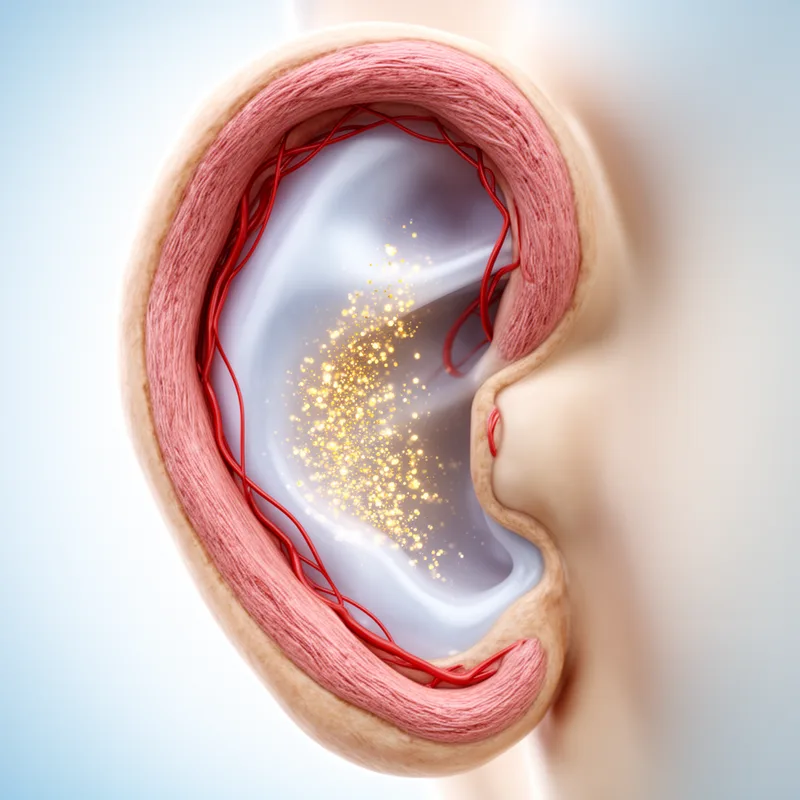
- Surgeons often use perichondrium during reconstructive procedures to enhance healing and stability of the cartilage.
Examples
-
A layer of perichondrium was then placed over the bone wax and promontory to provide further reinforcement of the complete round window occlusion (Figure 4, C).
Academic text (2009) -
I then performed a type III reconstruction of the ossicular chain and a myringoplasty with a sliced tragal perichondrium-cartilage graft.
Academic text (2003) -
A progressive mixed hearing loss developed one year later; at that time, a fistula was identified and repaired with perichondrium.
Academic text (2006) -
C: A layer of perichondrium (arrow) covers the bone wax, cartilage, and round window niche.
Academic text (2009) -
Perichondrium was removed, and a 2-mm biopsy punch was used to create a circular piece of cartilage.
Academic text (2009) -
A fistula repair was accomplished without removing the stapes from the vestibule by using perichondrium as a seal.
Academic text (2006) -
Upon incision of the internal perichondrium, a white lesion with the consistency of adipose tissue was well apparent and easily accessible.
Academic text (2005) -
A small piece of tragal cartilage and perichondrium was harvested through an incision on the medial aspect of the tragus.
Academic text (2009) -
As opposed to decreasing oval and round window compliance with fascia, complete round window niche occlusion with cartilage, bone wax, and perichondrium directly eliminates the mobility of the round window.
Academic text (2009) -
The perichondrium provides essential support to the cartilage in the ear, ensuring its proper function.
Surface Forms
Morphology
perichondrium = peri + chondr + ium
A technical medical formation from Greek combining forms; the elements are not productive standalone English words, so an average B1 learner cannot reliably derive the meaning from parts.
Etymology
The word perichondrium breaks into peri- meaning 'around' and chondrium meaning 'cartilage'. The peri- part is the same as in perimeter, so perichondrium is the thin tissue that sits 'around' cartilage and helps feed and protect it.

