
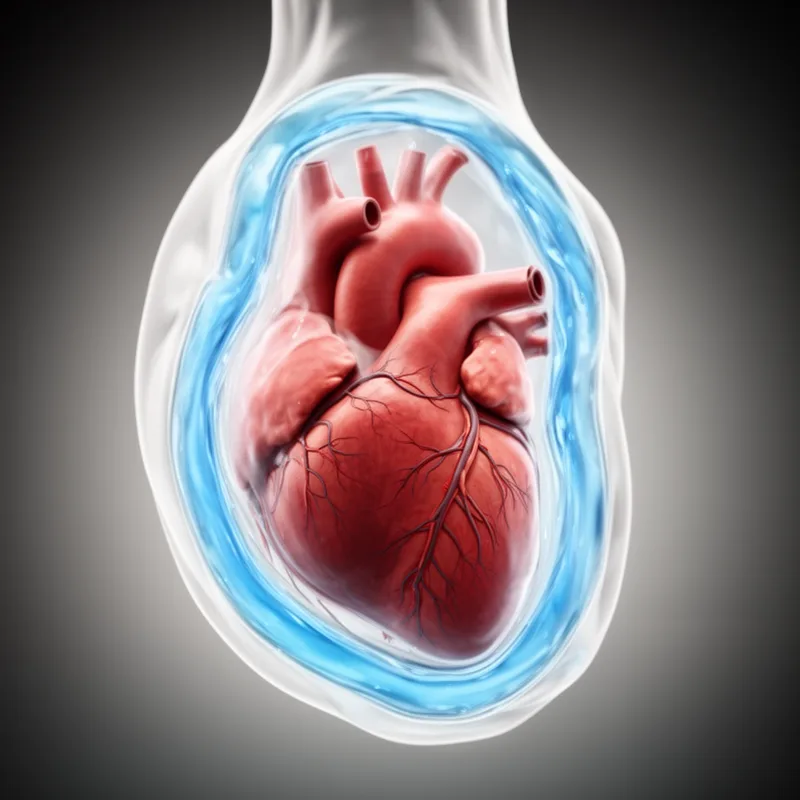
pericardial space
- noun
- /ˌpɛrɪˈkɑrdɪəl speɪs/
- Specialized
- The doctor explained that the pericardial space contains fluid that allows the heart to move smoothly.
Examples
-
PHOTO (COLOR): Coloured MRI scan through the chest of a 60-year-old patient with heart failure, showing fluid build-up in the pericardial space (pink) around the heart (yellow, centre left).
Academic text (2011) -
During the surgery, the surgeon drained excess fluid from the pericardial space to relieve pressure on the heart.
-
An infection can cause inflammation in the pericardial space, leading to discomfort and chest pain.
Synonyms

A small space filled with fluid between the layers around the heart that lets it move smoothly
Surface Forms
Morphology
Given knowledge of 'pericardial' (relating to the membrane around the heart) and 'space' (a physical area), the phrase simply denotes a physical area associated with the pericardium (i.e., the cavity or gap where fluid sits). This is a literal, compositional noun phrase rather than an idiom, so its meaning is directly derivable from its parts.
Etymology
Pericardial space names the thin gap between two layers around the heart: pericardial refers to those outer layers and space is the small gap that holds a little 'fluid', so the heart can slide and beat easily. So, when the pericardial space fills with too much 'fluid', it can squeeze the heart and stop it working well.

