
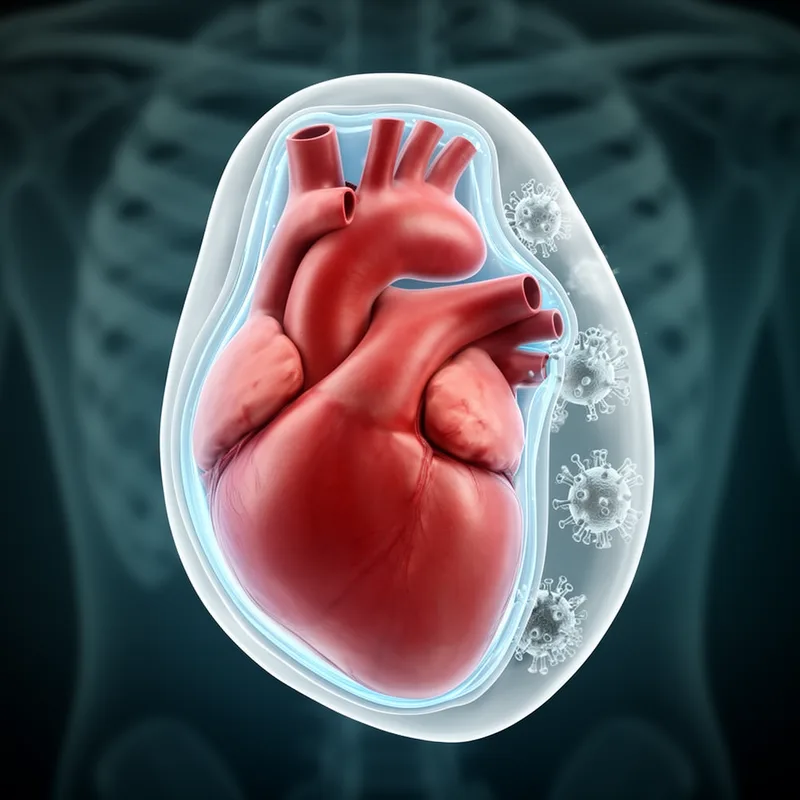
pericardial sac
 1
6.7
1
6.7

- noun
- /ˌpɛrɪˈkɑrdɪəl sæk/
- Specialized
- The pericardial sac protects the heart from physical shocks and infections.
Examples
-
During the operation, the surgeon carefully examined the pericardial sac for any signs of damage.
-
[Beck] Okay, pericardial sac is... sealed up.
-
No, the blood is in the pericardial sac.
-
Just the blood sample from the pericardial sac.
Fiction book (1998) -
The size of echo-free space depends on the amount of fluid in the pericardial sac.
Academic text (2016) -
An inflammation of the pericardial sac can lead to chest pain and difficulty breathing.
Synonyms
 7
8.1
7
8.1
A thin covering of two layers that surrounds and protects the heart

A small space filled with fluid between the layers around the heart that lets it move smoothly
Surface Forms
Morphology
The compound is fully compositional: 'pericardial' means relating to the membrane around the heart and 'sac' denotes a membranous fluid-containing structure, so together they literally describe the membranous sac surrounding the heart. While the term is technical, the meaning follows standard anatomical noun‑noun/adj‑noun composition and would be understandable to a B1 learner who knows both constituents.
Etymology
Pericardial sac comes from parts that mean peri- 'around' and cardial 'heart', and the word sac is like a bag. So imagine a bag wrapped around the heart — that's why the term names the protective sac that surrounds the heart.