
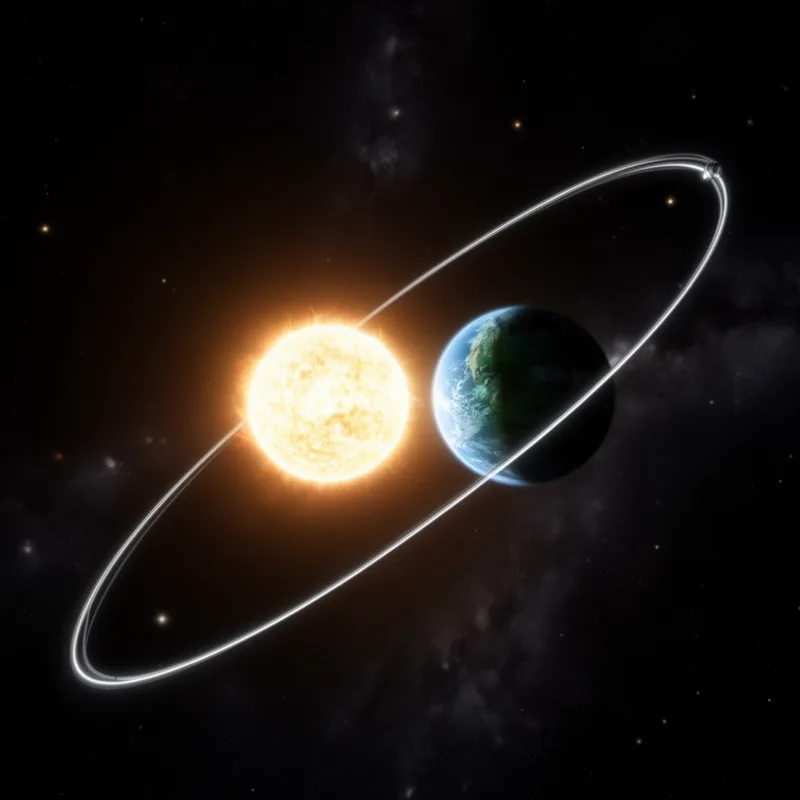
periastron
- noun
- /ˌpɛriˈæstrɒn/
- Specialized
- What we expect in this case is motion of this body essentially going back and forth and turning around at periastron and apoastron.
Examples
-
Astronomers calculate that the next periastron of the binary star system will occur in 2025, bringing the stars closer together than ever before.
-
During the periastron of the comet's orbit, it travels at incredible speeds as it approaches the Sun.
-
The periastron distance between the two stars allows for intense gravitational interactions, affecting their orbits significantly.
Synonyms

The point in an object's orbit when it is closest to the body it goes around
A place in an orbit where an object is closest to the planet or star it goes around
How Close
- Specialized

- Specialized
Surface Forms
Morphology
periastron = peri + astron
Formed from Greek combining elements peri- + -astron which are technical combining forms (not standalone English words), so an average B1 learner cannot reliably derive the meaning from the parts.
Etymology
The word periastron comes from the Greek parts peri- 'near' and astron 'star', the same root you see in astronomy and astronaut. So periastron is the point in an orbit when a star and its companion are closest to each other.

