
peptide
 11
5.8
11
5.8

- noun
- /ˈpɛpˌtaɪd/
- Specialized
- Glycosaminoglycans are covalently linked to peptide chains to form high-molecular-weight complexes called proteoglycans.
- natriuretic peptide
- synthetic peptide
- glucagon-like peptide
Loading YouTube…
Watch on YouTubeNow there, there are transporters for for small peptides in the guts.
- Now there, there are transporters for for small peptides in the guts.
- I remember you could measure for the first time chemicals, they are called peptides in the brain.
- Don't know, but it's a peptide and it works and you sleep.
- It's full of antioxidants and peptides and just gorgeous things.
- This is by nude sticks and it it is the peptide body cream.
- This is the Olay Hendrickson strength trainer peptide boost moisturizer.
- But I'm going to go there anyway just because this peptide lip treatment from Rd.
Examples
-
Research suggests that the peptide YY can help regulate hunger and promote weight loss.
-
Dynamic acquisition was done immediately after peptide administration in 13 patients.
Academic text (1995) -
So this is probably one of the peptide chains in our mystery protein.
-
They all have the same sort of peptide in the protein.
-
A proprietary peptide called OS One.
-
I remember you could measure for the first time chemicals, they are called peptides in the brain.
-
Nevertheless, assays for APP and Beta/A4 peptide should help the search for effective treatments.
Academic text (1992) -
There is some evidence that substance P, an 11-amino-acid peptide, is involved in the itching response in some diseases.
Academic text (1999) -
Scientists are studying the effects of a new peptide vaccine designed to enhance the immune response.
-
The laboratory synthesized a peptide chain composed of multiple amino acids to aid in drug development.
Compounds


How Long
- Specialized
435
2.8

- Specialized
2
6.6
- Specialized
11
5.8
- Specialized
- Specialized

 1
6.9
1
6.9
- Specialized
32
3.4
Surface Forms
Morphology
peptide = pept + ide
The combining form 'pept-' is a bound scientific morpheme (not a standalone English word) and 'peptide' is a technical biochemical term, so learners cannot reliably derive its meaning from familiar English components.
Etymology
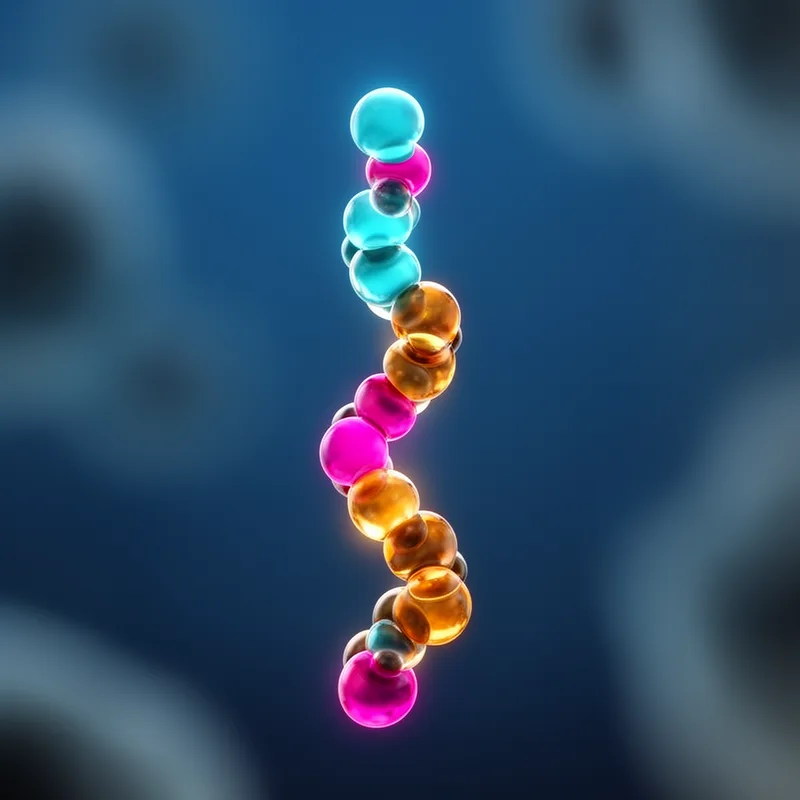
The word peptide comes from the Greek root pept-, from peptein, meaning 'to cook' or 'to digest'. So a peptide is like a small 'digested' piece of a protein, a short chain of amino acids formed when larger proteins are broken down.