
pepsinogen
- noun
- /ˌpɛp.sɪˈnoʊ.dʒən/
- Specialized
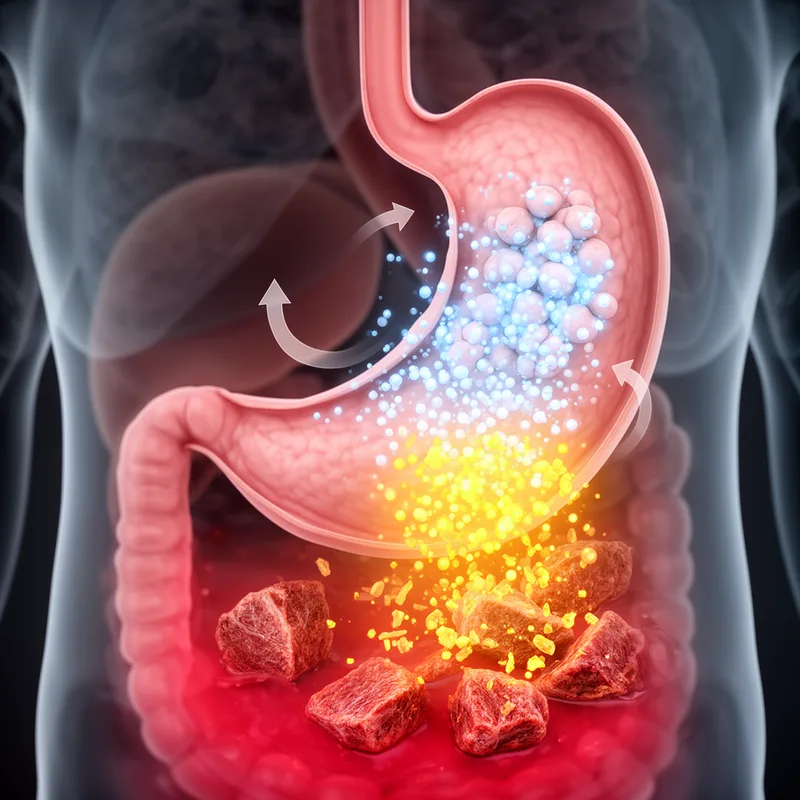
- Pepsinogen is secreted by chief cells in the stomach lining and activated to pepsin by gastric acid.
Examples
-
Pepsinogen is activated to pepsin by hydrochloric acid during the digestive process.
-
Doctors may measure pepsinogen levels to assess stomach function and diagnose certain diseases.
-
Pepsinogen conversion to pepsin is a key step in the digestive process.
-
The stomach produces pepsinogen to aid digestion.
-
Many cells in the stomach lining secrete pepsinogen.
-
Pepsinogen is an important substance that the stomach lining secretes as a precursor to pepsin.
-
Pepsinogen levels can indicate how well the stomach is functioning during medical tests.
Surface Forms
Morphology
Etymology
The word pepsinogen comes from pepsin, from a Greek word meaning 'digestion', and the ending -ogen, which means 'that which will become', like the English word 'generate'. So pepsinogen is the 'sleeping' or inactive form that becomes the active enzyme pepsin when stomach acid wakes it.

