
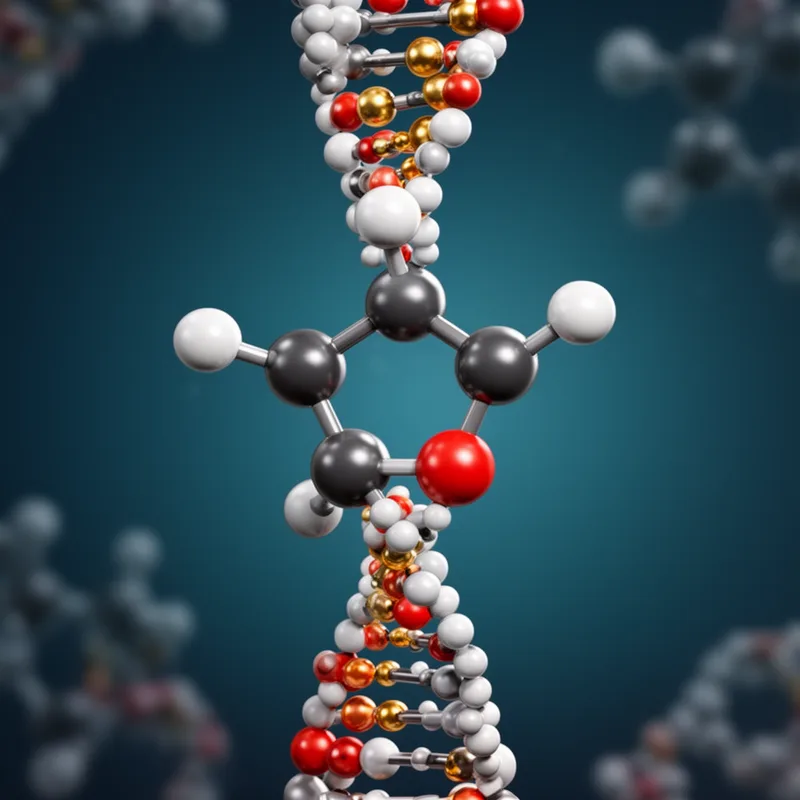
pentose


 1
9.6
- noun
- /ˈpɛnˌtoʊs/
- Specialized
- All right, so every pentose in a DNA polymer is deoxyribose.
Examples
-
In biochemistry, a pentose is crucial for various cellular functions, as it forms part of vital nucleotides.
-
One of the products of the pentose phosphate pathway is NADPH.
-
Let's start first here with the oxidative pentose phosphate pathway.
-
The pentose fraction constitutes as much as 40% of the hemicellulose, the majority of which is xylose.
Academic text (2015) -
It's freeing up glucose to be used by another biochemical pathway known as the pentose phosphate pathway.
-
Fruit has glucose and fructose, with pentose (5-carbon sugar) found exclusively in fresh fruit.
Blog text (30) -
After successfully finding ways to break down corn fiber into hexoses and pentoses, the researchers' next challenge is to identify or develop strains of microorganisms.
Academic text (1996) -
A pentose is a type of sugar that contains exactly five carbon atoms, such as ribose found in RNA.
-
The molecule of a pentose includes five carbon atoms arranged in a specific way, essential for its role in metabolism.
Surface Forms
Morphology
pentose = five (opaque) = pent + ose
The element 'pent-' is a Greek combining form for 'five' and '-ose' is a technical chemical suffix for sugars; this construction is specialized and not transparently guessable by average learners.
Etymology
The word pentose comes from the Greek part penta, meaning 'five', and the ending -ose, meaning 'sugar', the same -ose you see in glucose and fructose. So a pentose is simply a sugar made of five carbon atoms.