
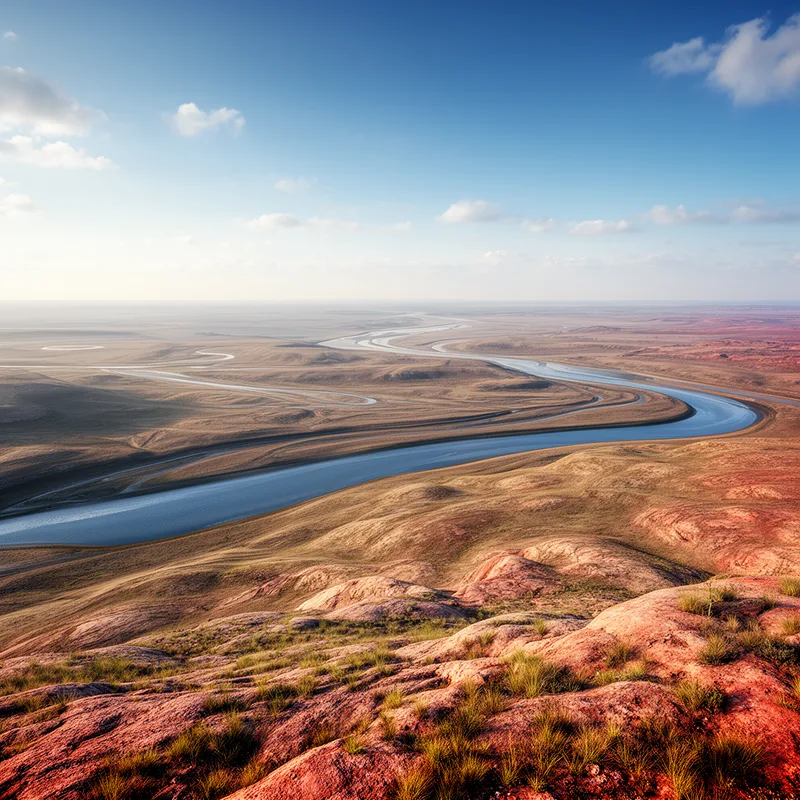
peneplain


 1
9.9
- noun
- /ˈpɛnəˌpleɪn/
- Specialized
- Hikers often enjoy the expansive views from the high points of the peneplain as they traverse the landscape.
Examples
-
Throughout the tree-dotted grassland and dry savannah, river valleys are incised below the flat peneplains, and there are strips of forest along rivers, even those that dry up seasonally.
Academic text (1995) -
The flat surface of the peneplain was created over millions of years by continuous erosion.
-
Bands of color mark some of the confluences; the waters rushing down from ancient highlands are relatively clear, while those meandering across the peneplain are turbid and brown.
Fiction book (2002) -
Physiographically, the area forms part of the Cceres peneplain, an upper Miocene erosion surface (Gomez-Amelia 1985).
Academic text (2002) -
If you look up the word monadnock (muh-NAD-nock), you'll find it refers to an isolated rocky hill or mountain surrounded by a peneplain, an area worn flat by erosion.
Academic text (2011) -
The study focused on how the peneplain was shaped by ancient river systems that gradually wore down the terrain.
Synonyms
A nearly flat land surface formed by many years of being worn away by wind and water
How Level

Surface Forms
Morphology
Etymology
The word peneplain comes from the Latin paene meaning 'almost' and the common English word plain meaning 'flat land'. So a peneplain is literally 'almost a plain', which helps you remember it is a broad, nearly level surface shaped by long erosion.