
penecontemporaneous


 1
9.9
- adjective
- /ˌpɛnɪˌkɒntɛmˈpɔːrənəs/
- Specialized
- Geologists often study penecontemporaneous formations.
Examples
-
The sedimentary deposits are considered penecontemporaneous because of their closely matching ages.
-
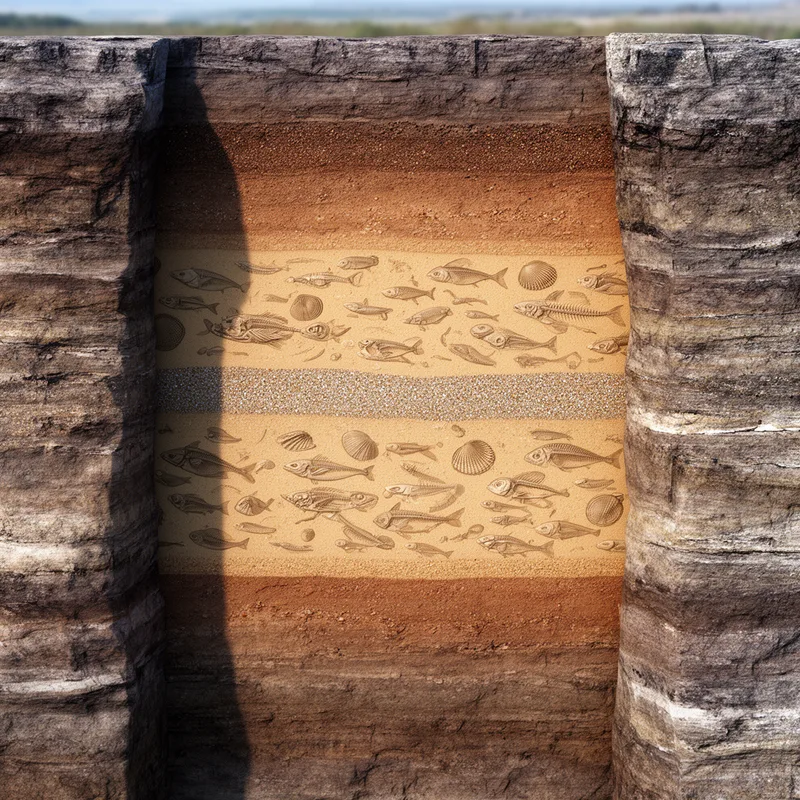
The fossils in these two layers are penecontemporaneous, indicating they were deposited almost simultaneously.
-
Geologists determined that the volcanic eruptions were penecontemporaneous based on radiometric dating.
-
The two rock layers are penecontemporaneous.
-
The penecontemporaneous volcanic eruptions created layers of ash alongside the sedimentary deposits.
-
During the excavation, we found penecontemporaneous fossils that dated back to the same geological period as the surrounding rocks.
-
Geologists study penecontemporaneous formations to understand how different geological events overlap in time.
Synonyms
 1
4.4
Happening at the same time as another event
 1
6.3
Existing at the same time as something else
 1
8.8
Happening at the same time as something else

Happening at exactly the same time as something else

Happening at the same time as something else

Happening at the same time as another thing
How Contemporary
47
4.4

- Specialized
1
9.9
1
9.9
2
4.2
9
9.6
Surface Forms
Morphology
penecontemporaneous = contemporaneous (semi-transparent) = pene + contemporaneous + pene
The adjective is clearly built from 'contemporaneous' with 'pene-' meaning 'almost', but the combining form 'pene-' is specialized and not familiar to average learners.
Etymology
Penecontemporaneous comes from Latin pene meaning 'almost' and the familiar word contemporary meaning 'at the same time'. So it describes things, like rock layers or events, that happened 'almost at the same time'.