
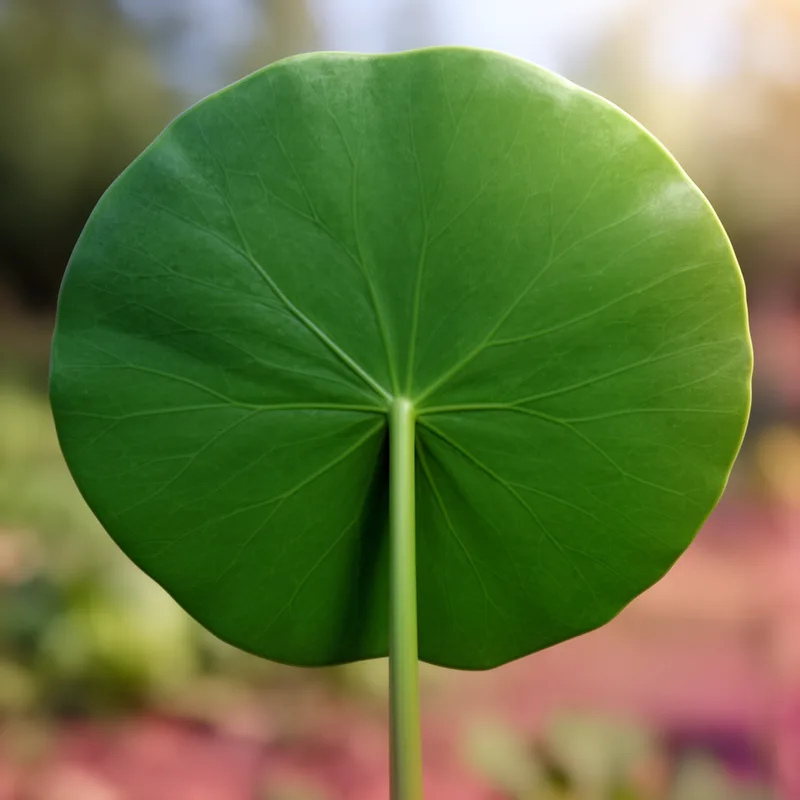
peltate leaf


 1
9.9
- noun
- /ˈpɛlteɪt liːf/
- Specialized
- A botanist described the rare plant as having a distinctive peltate leaf arrangement.
Examples
-
The nasturtium is easily identified by its round, peltate leaf with the stem attached near the center.
-
Many aquatic plants feature a broad, peltate leaf that floats on the surface of the water.
-
The peltate leaf of the nasturtium is quite distinctive.
-
Many plants, like the lotus, have peltate leaves.
-
The tropical plant features large peltate leaves that provide ample shade on hot days.
-
In botanical illustrations, peltate leaves of the nasturtium are easily recognizable due to their unique shape.
-
Gardeners often admire the distinctive appearance of peltate leaves in various ornamental plants.
Surface Forms
Morphology
The adjective 'peltate' describes a specific morphological property (stalk attached to the lower/central surface) and 'leaf' names the plant organ, so the combined phrase simply describes a leaf with that property. Although 'peltate' is a technical term, the meaning is fully compositional and directly derivable from the constituent definitions, making the MWE transparent to a learner who knows both words.
Etymology
Peltate leaf comes from a word for a small shield; imagine a round leaf like a shield with the stem attached near the middle instead of at the edge. That's why the term describes a leaf with the stem 'attached to the lower surface' rather than at the rim.