
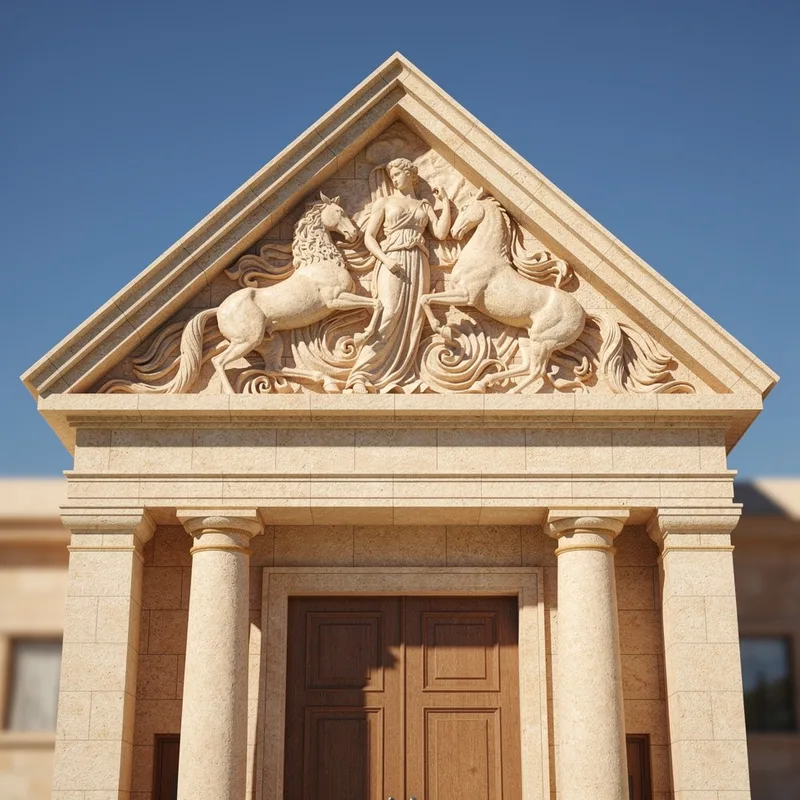
pediment
 1
9.5

- noun
- /ˈpɛdɪmənt/
- Specialized
- The taut muscles of Poseidon's marble torso from the west pediment stand in sharp contrast to the dull white of his plaster shoulders and back.
- a triangular pediment
Examples
-
Divided into three bays by four pilasters, with a second story consisting of three windows surmounted by a pediment, the stuccoed facade eschews decorative details.
Academic text (1994) -
And some of the more delicate decorative work in the pediment above.
-
But the pediment and the legs were damaged, so the finials and the legs were salvaged from a different piece.
-
Immense marble blocks for the Parthenon's pediment have just arrived from quarries at Mount Pentelicon.
-
Four half-columns divide the main level into three bays, crowned by a full entablature with a triangular pediment above the central bay.
Academic text (1992) -
Visitors gazing at the pediment's storied figures saw between these two depictions a plow and a mule.
Blog text (22) -
The grand pediment above the entrance creates an impressive focal point for the building.
-
Architects often use a pediment to enhance the visual appeal of the facade.
-
The intricate designs on the pediment add a touch of elegance to the historical structure.
Synonyms
 5
6.6
A triangular part of a wall under a sloping roof


 1
9.9
A triangular decorative section above a building entrance often with sculpture
Surface Forms
Etymology
Pediment comes from Italian and Latin roots like ped- meaning 'foot', the same root you see in pedal. A helpful way to remember it is to imagine the triangular pediment as a 'cap' or 'foot' that sits above a doorway, which is why the word names that triangle on a building.