

pectoral arch
- noun
- /ˈpɛktərəl ɑrtʃ/
- Specialized
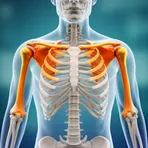
- The pectoral arch consists of the clavicles and scapulae, forming a sturdy framework for the shoulders.
Examples
-
The pectoral arch supports the upper limbs and provides attachment for several muscles.
-
In some injuries, the pectoral arch may be fractured, affecting arm movement.
-
Evolutionary biologists study the pectoral arch to understand adaptations in different vertebrates.
-
The pectoral arch supports the upper limbs.
-
Can you see the pectoral arch in this diagram?
-
The pectoral arch is crucial for connecting the arms to the torso in many animals.
-
When studying human anatomy, students learn about the pectoral arch and its role in shoulder function.
Synonyms


 1
5.7
1
5.7
The bones that connect the arms to the body, including collarbones and shoulder blades
 1
7.7
1
7.7
The bones near the shoulders that attach the arms to the chest
Surface Forms
Morphology
The meaning is directly derivable from the constituents: 'pectoral' (pertaining to the chest/shoulder area) combined with 'arch' (an arched structural form) yields an arched bony structure in the chest/shoulder region. Although anatomical and somewhat technical, the compositional logic is transparent and would be understandable to a B1 learner who knows both words.
Etymology
Pectoral arch comes from pectoral meaning 'chest' and arch meaning 'curved bridge'. Imagine a curved band of bones across the top of the chest that holds the arms like a small bridge, and that's why pectoral arch means the bony structure that 'supports' the arms.