

peat
 14
5.0
14
5.0

- noun
- /piːt/
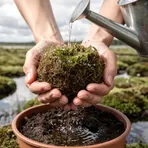
- Peat forms in bogs over thousands of years from the decay of plant material.
- peat swamp
- peat soil
- peat fires
Loading YouTube…
Watch on YouTubeIt's so it's got that peat humus and peat Moss and it's so spongy.
- It's so it's got that peat humus and peat Moss and it's so spongy.
- It's mountains, it's lakes, it's countryside, there's peat bogs.
- OK, you might have a, a peat that forms shales.
- But now, tuned to his big turnip face, fringed peat Moss sprouts from his ears.
- So I mean, where do you find it's mountains, it's lakes, it's countryside, it's peat bobs.
Examples
-
Originally a glacial lake, the fen has filled in with vegetation, notably sphagnum, or peat moss.
Academic text (2011) -
Next thing is this little bag of peat disks right here.
-
We'll probably need some peat as well.
-
So it's this whole process of keeping the peat wet that is helping us to ensure that it stores carbon?
-
Water was carrying away the peat moss that had been laid around the base of the tree.
Fiction book (1999) -
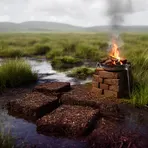
We brought Irish books with us to read over peat fires in the evenings.
Fiction book (2002) -
It means that I deliver peat for fuel from the bog.
-
Until very recently, tropical peat swamp forests were a neglected ecosystem with low conservation priority.
Academic text (2011) -
Now gardeners and professional growers rely heavily on peat, like really heavily.
-
Lazy smoke rose from farmsteads along the river, where dutiful peat-eating peasants labored alongside their oxen.
Fiction book (1996)
Compounds
How Decomposed

Surface Forms
Etymology
Peat comes from an old German word meaning 'turf', the thick layer of plants that grows in a bog and slowly turns into brown, soil-like material. That's why peat today means the partly rotted plant material people cut from bogs to burn for fuel or add to soil.