
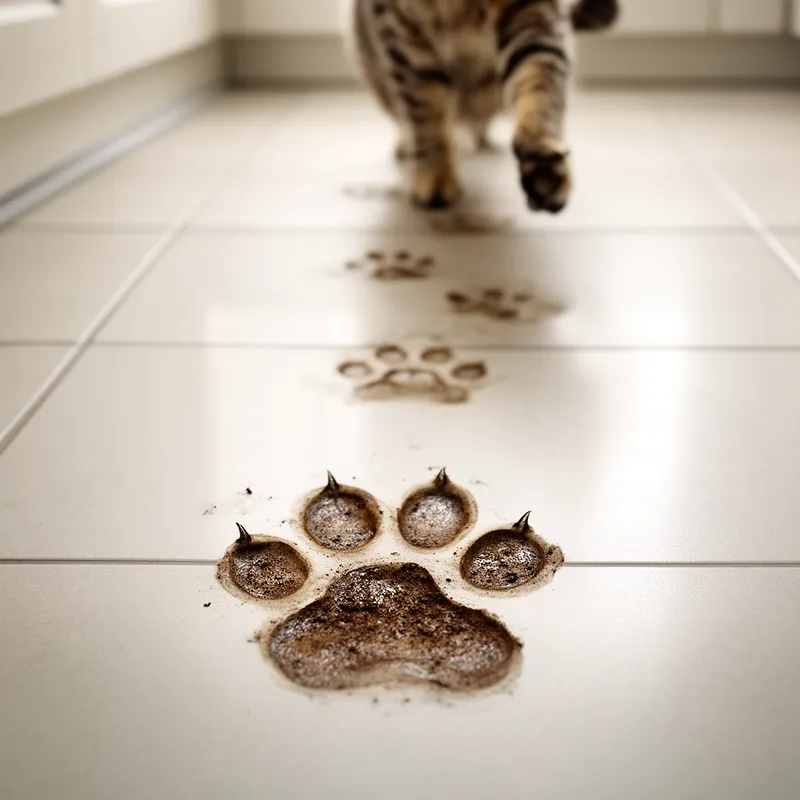
paw print
 4
2.0
4
2.0

- noun
- /pɔː prɪnt/
- Those are Chumsley's paw prints.
- dog paw prints
- trail of paw prints
- a fresh paw print
Loading YouTube…
Watch on YouTubeBut a few days later there were Jaguar paw prints in the sand.
- But a few days later there were Jaguar paw prints in the sand.
- OK this look how cute this is little puppy paw print.
Examples
-
Two sets of prints headed out toward the open pasture—the marks left by a man's boots and the paw prints of a large dog.
Fiction book (1998) -
There's a little layer of sand all over the kitchen floor, and you can see the cat's paw prints in it.
Fiction book (1997) -
Looks like a paw print!
-
P. S: "Sorry about the paw prints by the front door.
-
Where are your paw prints?
-
Well, I just saw some fresh paw prints heading out that way.
-
The next morning, she found paw prints in the snow beneath her window.
Fiction book (1995) -
The paw prints point to a canine.
-
But a few days later there were Jaguar paw prints in the sand.
-
The next morning, she found paw prints in the snow beneath her window.
Synonyms
 419
2.0
419
2.0
A mark left on a surface by a hand, foot, or paw
 126
1.6
126
1.6
A mark left by a foot or shoe on a surface
 22
4.2
22
4.2
A mark made when something presses into a surface or the tool that makes it
 1
2.4
1
2.4
A mark left by a foot or shoe on a surface
How Clear

Surface Forms
Morphology
The meaning 'a mark left by an animal's foot' is directly and transparently derivable from combining 'paw' (animal foot with pads/claws) and 'print' (an impression or mark). This simple noun+noun compositional pattern is cross-linguistically common and follows standard English modification, so a B1 learner who knows both constituents will readily infer the MWE meaning.
Etymology
Paw print shows the simple picture of a paw (an animal's foot) pressing into soft ground and leaving a print. Imagine a cat or dog making that small stamp in mud or on the floor; that clear image is why paw print means 'a mark left by an animal's foot' and helps people tell which animal was there.