
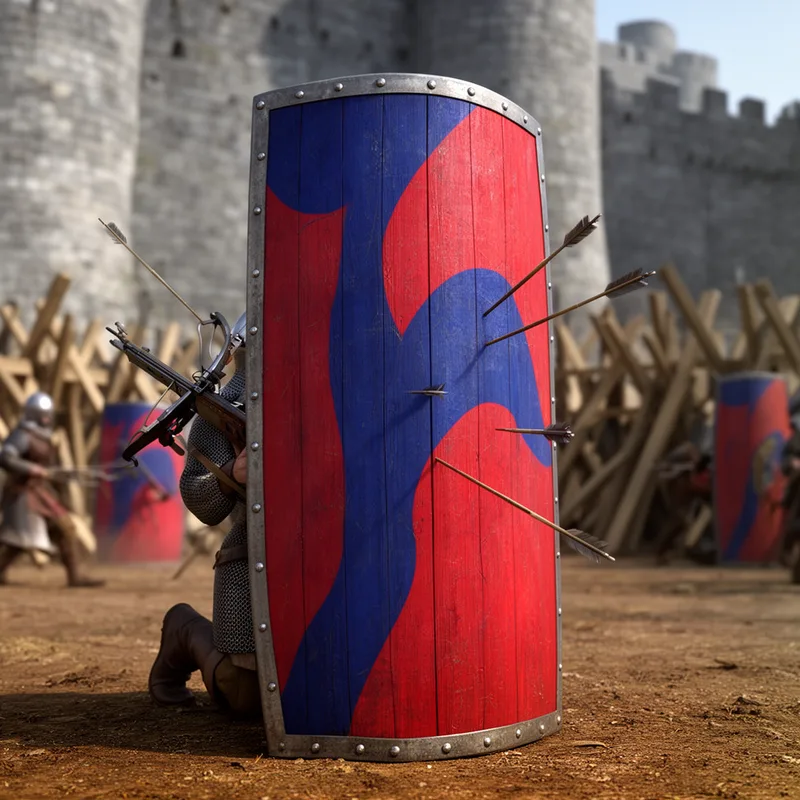
pavise
- noun
- /ˈpævɪs/
- Archaic
- The museum displayed a well-preserved 15th-century pavise with elaborate heraldic designs.
Examples
-
During the siege, soldiers placed the pavise upright to shield themselves from arrows.
-
Archers would hide behind a pavise while reloading their crossbows on the battlefield.
-
The knight raised his pavise to shield himself from arrows.
-
During the siege, soldiers used pavises to protect themselves.
-
Archers would hide behind a pavise while reloading their crossbows on the battlefield.
-
During the siege, soldiers placed the pavise upright to shield themselves from arrows.
-
The knight raised his pavise to protect his body from incoming projectiles.
Synonyms

 476
2.9
476
2.9

A broad piece of armor held to protect someone from harm

A large heavy shield used in the Middle Ages to protect the whole body

A movable shield that protects soldiers from enemy fire

Something you put over a thing to keep it safe from damage
How Protective

Surface Forms
Etymology
Pavise comes from the Old French word pavis, which meant 'shield'. Because these shields were very large and could hide a whole person or be placed upright on the ground, pavise now means a heavy, long shield used to protect the whole body.