
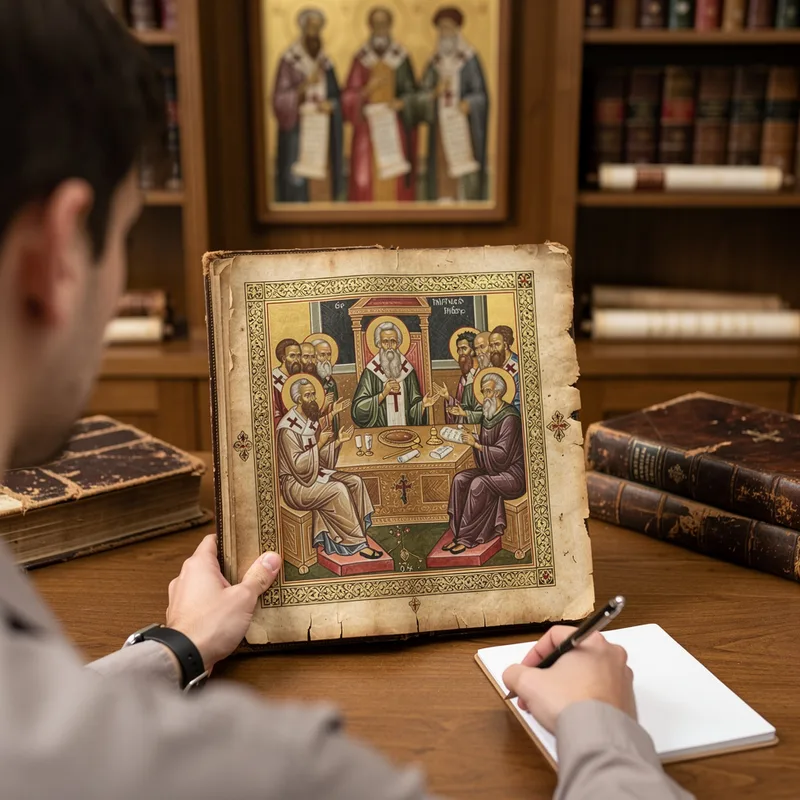
patristic
 1
9.9

- adjective
- /pəˈtrɪstɪk/
- Specialized
- The conference included a session on patristic thought and its influence on modern Christianity.
- patristic theologians
- Patristic Theology
- Patristic tradition
Examples
-
The text itself contains more patristic material than is the usual case in agreed texts.
Academic text (2011) -
Martyrdom is often referred to in patristic writings as a baptism of blood, a rebirth through death.
Academic text (2012) -
The question has been faced since patristic times.
Academic text (2003) -
The notion, like that concerning Saint Luke, was apparently unknown during early Christian and patristic times.
Academic text (1993) -
One did not require expertise in ancient languages, in biblical studies, or in patristic learning in order to meet and overcome religious error.
Academic text (2005) -
The language of "indissolubility" related to marriage is not biblical, nor is it patristic.
Academic text (2004) -
The concert was part of an international conference organized by the Augustinian Patristic Institute in Rome.
Blog text (19) -
Wary of the former error, patristic writers kept God close to the earth by describing the Spirit as love.
Academic text (1994) -
But scholars have noted a certain patristic reserve toward Christ's emotions.
Academic text (2008) -
In this one, therefore, I would like to turn, in some detail, to those patristic theologians who first grappled with these issues.
Academic text (1993)
Synonyms

Relating to the writings and teachings of early Christian church leaders
Surface Forms
Morphology
patristic = patri + ic
Formed from the combining form 'patri-' (father) + '-ic', but 'patri' is not a standalone English word and the specialized sense 'relating to Church Fathers' is not derivable by average learners.
Etymology
The word patristic comes from the Greek word patēr meaning 'father', the same root you see in patriarch. It was used for the early 'fathers' of the Christian church, so patristic means about those church fathers and their writings.