
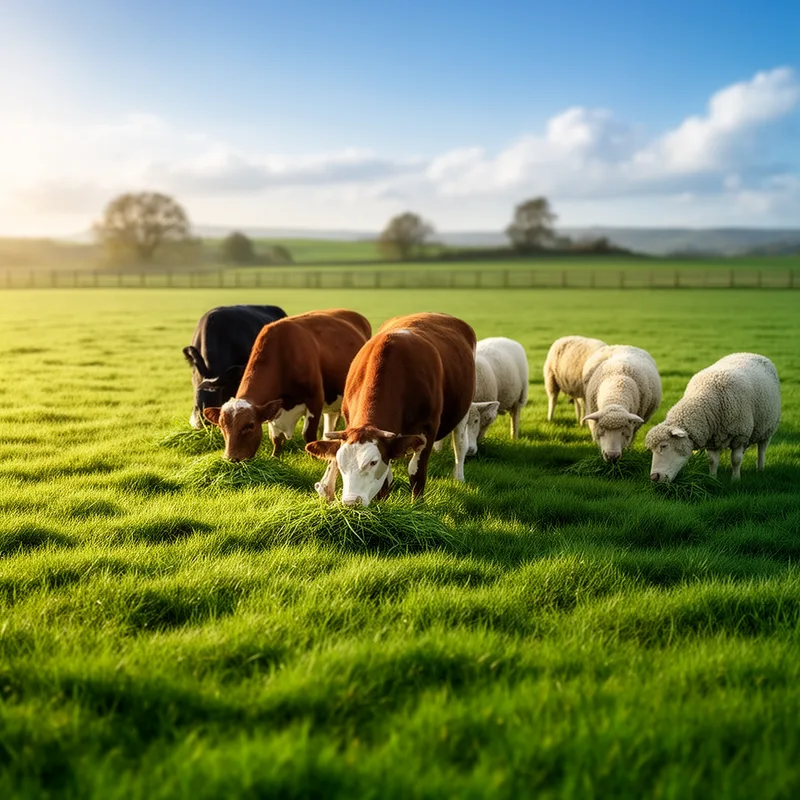
pastureland
 2
3.7
2
3.7

- noun
- /ˈpæs.tʃər.lænd/
- Pastureland is common in the uplands, but some parts of this region remain heavily forested.
Examples
-
Swatches of woods alternate on either side of the road with cultivated fields and sweeping pastureland.
Fiction book (2000) -
Good pastureland near major markets was at a premium and could prove critical to cattle.
Academic text (2003) -
There were some fields that Emma said had been common pastureland since colonial times, and there were woods here and there.
Fiction book (1997) -
Tiny swatches of pastureland slowly give way to rougher country.
Fiction book (1990) -
Approximately 70 percent of the hill-country farms damaged by this storm lost as much as one-tenth of their pastureland.
Academic text (1991) -
Pasturelands go through a stage of plant succession: they turn into scrub and lose their grazing quality.
Academic text (2011) -
The farmers let their cattle roam freely across the vast pastureland filled with fresh grass.
-
During the summer, the pastureland becomes a vibrant green as livestock graze and thrive.
-
We enjoyed a picnic on the gently sloping pastureland while watching the sheep graze peacefully.
Synonyms
 742
1.0
742
1.0
An area of open land used for farming or grazing
 102
1.4
102
1.4
Land with grass where farm animals eat
 85
1.0
85
1.0
A field of grass and wildflowers in the countryside
 69
3.5
69
3.5
A large open area of grass where animals graze
 56
3.2
56
3.2
An open grassy area near houses where people meet or play
 20
2.7
20
2.7
An open area covered mainly with grass where animals live or graze
 8
3.4
8
3.4
A small enclosed field where animals such as horses graze or exercise
 8
9.9
8
9.9
A field planted with grass for animals to eat or to cut for hay
 3
2.5
3
2.5
Land with grass where animals like cows or sheep eat
 3
2.0
3
2.0
A field of grass where cows eat
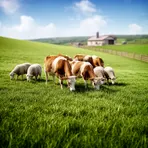 2
2.6
2
2.6
Land with grass where farm animals eat
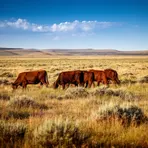 2
6.6
2
6.6
Land with natural plants where animals like cattle graze
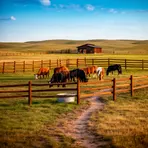 2
3.5
2
3.5
Land used for keeping animals like cows and horses
 1
8.2
1
8.2
Land with grass that animals like cows or horses eat


 1
3.1
1
3.1
Open land with grass and wildflowers where animals graze
 1
8.1
1
8.1
An open field of grass where animals graze
How Suitable

Surface Forms
Morphology
Etymology
Pastureland comes from the two words pasture and land. Pasture comes from an old Latin word meaning 'to feed', so pastureland is land where animals 'graze' and eat grass.