
pastoralism


 1
7.5
1
7.5
- noun
- /ˈpæstərəlɪzəm/
- Specialized
- In this essay, the ecological setting of Mongolian pastoralism is first briefly described.
- nomadic pastoralism
- agriculture and pastoralism
- changes in pastoralism
Examples
-
At that time, the Hopi lifestyle was traditional, based on farming, foraging, and some pastoralism.
Academic text (2004) -
Nomadic pastoralism is glorified and romanticized, and Kel Ewey emphatically identifies it with nobility.
Academic text (1992) -
Tourism has had a greater role in recent changes in pastoralism than in agriculture.
Academic text (1993) -
The influx of specialized pastoralism changed trade intensity in the region.
Academic text (1998) -
Despite the push toward commercial-scale agriculture, pastoralism remains an important part of Kenya's economy.
Academic text (2007) -
During the 1800s, in American intellectual circles, the topic of "pastoralism" was recurrent.
Blog text (2) -
Increasing regional differentiation in wealth, inflation, out-migration, and changes in pastoralism and forest use may have long-term adverse effects.
Academic text (1993) -
The retraining emphasized livelihood alternatives other than pastoralism and subsistence agriculture.
Academic text (1994) -
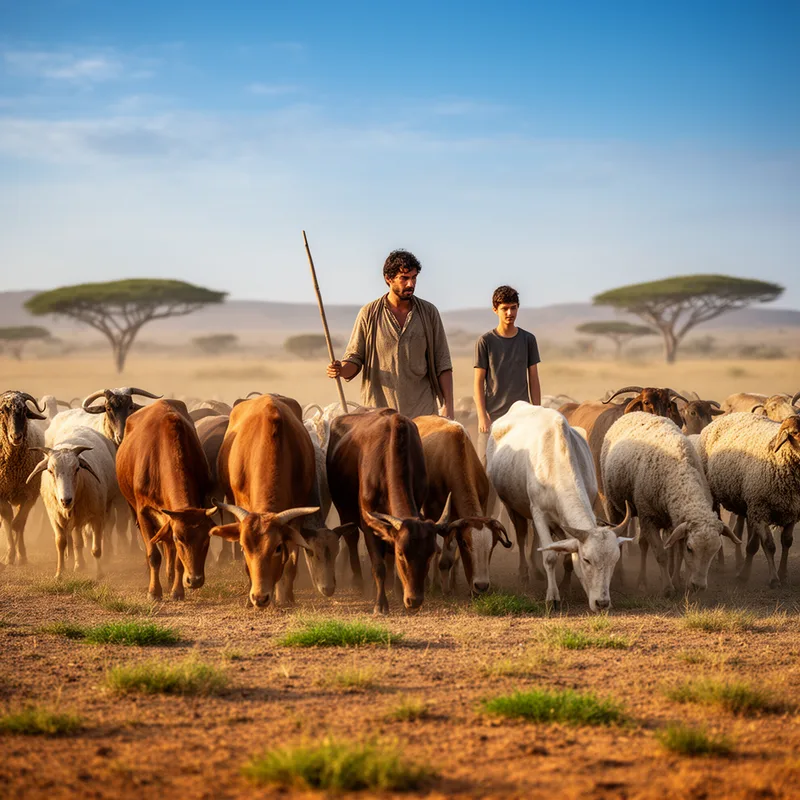
Many indigenous communities practice pastoralism by herding sheep and goats across vast grasslands.
-
In Mongolia, pastoralism is a way of life that involves moving livestock to find fresh pastures.
Synonyms
 16
2.8
16
2.8
The activity of raising farm animals, especially cattle, on a large farm
How Pro-Rural

Surface Forms
Morphology
Etymology
Pastoralism comes from the Latin root pastor, which means 'shepherd', and the ending -ism, which means 'a way' or 'practice'. Think of pasture, land where animals eat: pastoralism is the practice of raising and herding animals, often moving them to new grazing land, so the origin explains the modern meaning.