
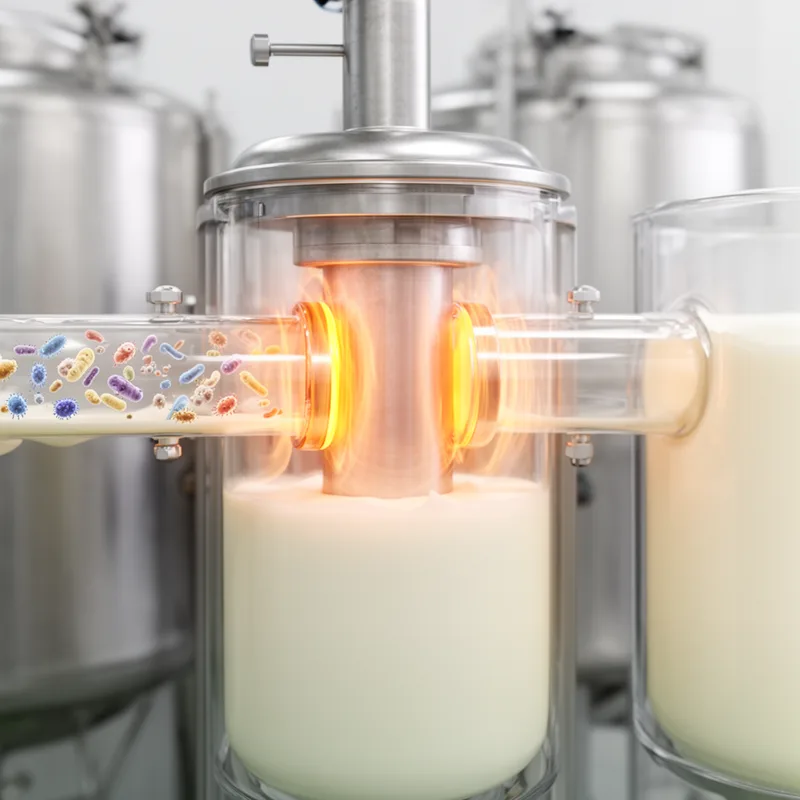
pasteurization
 3
4.6
3
4.6

- noun
- /ˌpæstʃərɪˈzeɪʃən/
- Specialized
 :
pasteurización
:
pasteurización
- Pasteurization remains the best way to reduce the unavoidable risk of contamination, according to the authors.
- pasteurization of milk
- pasteurization temperature
- pasteurization of water
So processed honey undergoes pasteurization and filtration to make it more clear.
- So processed honey undergoes pasteurization and filtration to make it more clear.
- So here are some enzymes which are deactivated or deactivated or otherwise somehow limited after pasteurization.
- Hot pasteurization, cold pasteurization wasn't fresh.
- That's why like pasteurization, that's not about sterilizing milk cooking, it's not about sterilizing the meat.
- No, I, I agree, you know, Louis Pasteur, from which from whom we got pasteurization, of course, reportedly put over the entrance to his office.
Examples
-
Pasteurization kills bacteria, viruses, and cysts, but does not remove chemical contaminants (2, 3).
Academic text (1998) -
Boiling water is not necessary to kill pathogens, but reaching water pasteurization temperature is critical.
Academic text (1998) -
A mobile unit demonstrated pasteurization tests and controls across the country.
Academic text (2002) -
Since pasteurization occurs at a lower temperature than boiling, less fuel is needed for heating water.
Academic text (1998) -
Recent renovations will help expand research on the pasteurization of foods.
Academic text (2000) -
Usually, L. monocytogenes is destroyed during milk pasteurization or cooking.
Academic text (1996) -
The sun's energy can also be used to heat water to pasteurization temperature, which kills most pathogens.
Academic text (1998) -
Human infection with Mycobacterium bovis is rare in developed countries because of milk pasteurization and the slaughter of infected cattle.
Academic text (1992) -
The renovations will help us expand research on pasteurization of solid foods such as fruits and vegetables and thermally sensitive fluids such as eggs.
Academic text (2000) -
The pasteurization of milk helps eliminate harmful bacteria and makes it safer to drink.
How Sterile

Surface Forms
Morphology
pasteurization = pasteurize (transparent) = pasteurize + ation
A regular noun formed from the verb 'pasteurize' with the productive suffix '-ation', denoting the process.
Etymology
The word pasteurization is named after the French scientist Pasteur, who showed that gentle heat could 'kill' dangerous germs in milk and wine. So, pasteurization means using mild heat to make food safe while keeping its taste and nutrients.