

passeriform bird
- noun
- /ˈpæsərɪˌfɔrm bɜrd/
- Specialized
- The robin is a common example of a passeriform bird found in many gardens.
Examples
-
Researchers study the migration patterns of passeriform birds to better understand climate change impacts.
-
Many species of passeriform birds are known for their elaborate courtship songs.
-
The passeriform bird sang beautifully in the morning.
-
Many passeriform birds migrate during the winter months.
-
Many species of passeriform birds are known for their elaborate courtship songs.
-
The robin is a common example of a passeriform bird found in many gardens.
-
Many passeriform birds migrate during the winter months.
Synonyms


 1
9.8
1
9.8
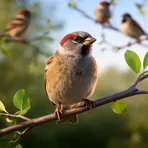
A small bird like a sparrow or finch that sits on branches

A bird with feet that hold onto branches, like a robin or sparrow

A bird that sits on branches using its feet to hold on, like a robin
Surface Forms
Morphology
passeriform + bird
The phrase is compositional (adjective + noun) so in principle it denotes a type of bird — if a learner knew the adjective 'passeriform' they would understand it as 'a bird of the Passeriformes.' However, 'passeriform' is a specialized taxonomic term (and not decomposable into common B1 vocabulary), so the meaning is only partially transparent to an average B1 learner without prior exposure.
Etymology
Passeriform bird may come from the Latin word passer, meaning 'sparrow', a small bird that sits on branches. That's why the name is used for the large group of birds that 'perch' with toes made for gripping and are often songbirds.