

passenger pigeon
 1
9.5
1
9.5

- noun
- /ˈpæsɪndʒər ˈpɪdʒən/
- US
- Many people are surprised to learn that the passenger pigeon, which once filled North American skies, is now extinct.
- the extinction of the passenger pigeon
- the passenger pigeon is extinct
- the last passenger pigeon
Examples
-
Over forty years, citizens slaughtered billions of passenger pigeons for sport, to sell to restaurants, or to use as hog feed.
Academic text (1993) -
As recently as 200 years ago, flocks of passenger pigeons numbering in the billions blanketed the North American sky.
Blog text (11) -
Remember the passenger pigeon of the United States?
Blog text (8) -
Harry, have any passenger pigeons reappeared?
Blog text (33) -
The passenger pigeon would soon be extinct.
Blog text (8) -
They're passenger pigeons, he thought, birds that have been extinct for many years.
Fiction book (2000) -
Not even any developer denies that the passenger pigeon is extinct, nor does any conservation biologist deny that the rare and declining black-capped vireo still exists.
Academic text (1991) -
The passenger pigeon was once so abundant that flocks could darken the sky as they flew overhead.
-
The tragic fate of the passenger pigeon serves as a warning about the consequences of overhunting and habitat loss.
Synonyms
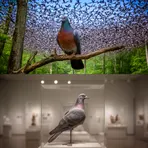
A large North American pigeon that lived in huge flocks and is now extinct
Surface Forms
Morphology
The noun phrase is compositionally built: 'passenger' modifies 'pigeon' to indicate a type of pigeon associated with traveling or migration, so a learner who knows both words will infer it refers to a kind/kind of pigeon. Although the historical details (its former abundance and extinction) are not derivable from the words, the basic referent—a species/type of pigeon—is directly inferable from the constituents.
Etymology
Passenger pigeon may come from an older meaning of passenger as 'one who passes by', because people saw huge flocks of pigeon that seemed to pass through the land. That's why the name makes you think of a traveling bird, but the species is now extinct.