
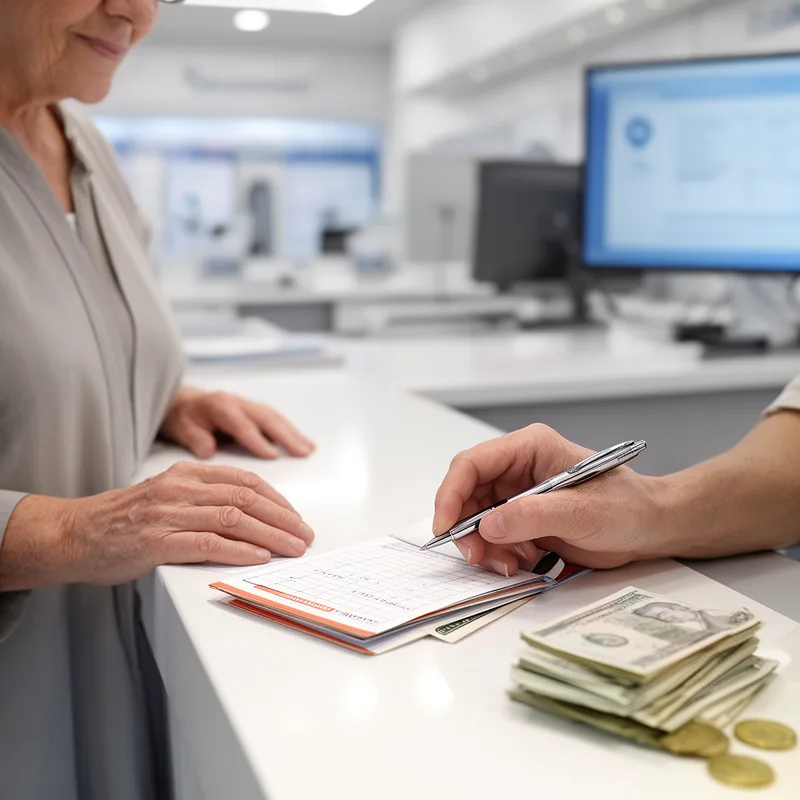
passbook savings account
- noun
- /ˈpæsˌbʊk ˈseɪvɪŋz əˈkaʊnt/
- Archaic
 :
cuenta de ahorros con libreta
:
cuenta de ahorros con libreta
- I opened a passbook savings account at the bank.
Examples
-
Many older customers still prefer a passbook savings account over digital banking options.
-
She opened a passbook savings account to keep track of her deposits more easily.
-
The bank issued a new passbook when he lost his passbook savings account.
-
Do you have a passbook savings account?
-
Opening a passbook savings account is a great way to save money while keeping track of your deposits and withdrawals.
-
Many people prefer to keep their emergency funds in a passbook savings account because it allows for easy access to their money.
-
You can monitor your funds regularly since every transaction is documented in your passbook savings account.
Synonyms
 ∞
2.1
∞
2.1

A record of money received and paid by a person or business
 168
1.5
168
1.5
A service from a bank to keep and use your money
 50
2.3
50
2.3
A bank service that holds money for future use and pays interest
 2
3.9
2
3.9
A bank account where you leave money for a fixed time and often cannot take it out without notice
Surface Forms
Morphology
The phrase is directly compositional: 'passbook' specifies the physical booklet used, 'savings' specifies the type of funds, and 'account' names the financial record, so the overall meaning (a savings account recorded in a passbook) is derivable from the parts. This follows a common noun-modifier pattern and corresponds to similar banking terms across languages, so a B1 learner who knows the constituent words would readily understand it.
Etymology
The term passbook savings account comes from the small paper book called a passbook that the bank wrote every 'deposit' and 'withdrawal' into. That's why the name means a savings account where all 'transactions' are kept in a paper book.