
parthenocarpic
- adjective
- /ˌpɑrθəˈnoʊkɑrpɪk/
- Specialized
- The parthenocarpic cucumber variety is popular because it produces fruit without pollination.
Examples
-
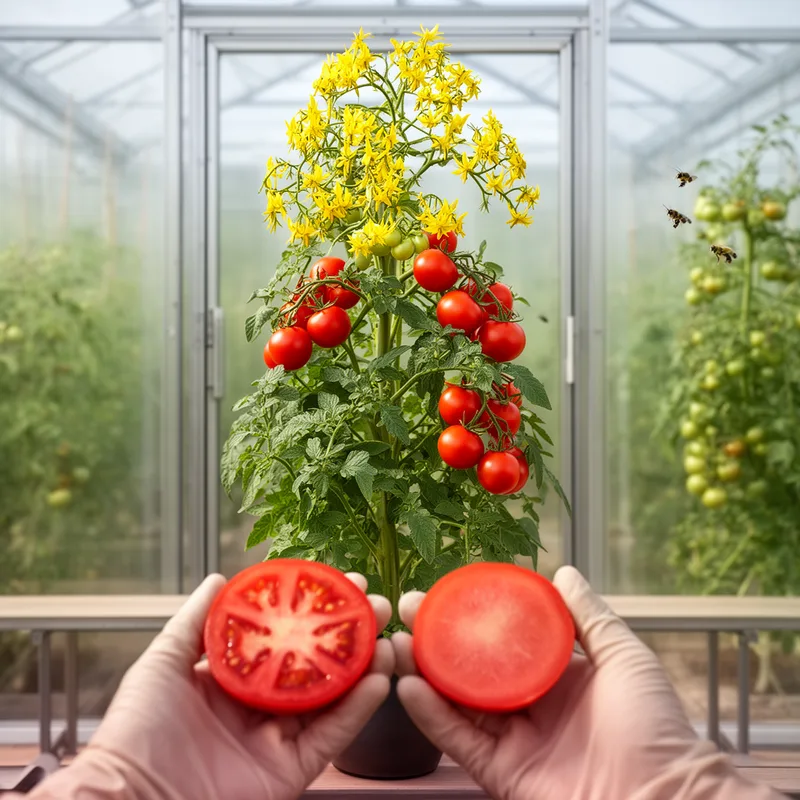
A parthenocarpic tomato can develop even when pollinators are scarce.
-
The parthenocarpic plants can produce seedless fruits, which makes them popular among growers.
-
Farmers prefer parthenocarpic plants for greenhouse production since they yield seedless fruit.
-
The parthenocarpic variety of banana is popular for its seedless fruit.
-
Many gardeners prefer parthenocarpic cucumbers for easier cultivation.
-
Many gardeners prefer parthenocarpic varieties because they yield fruit without the need for fertilization.
-
Tomatoes from parthenocarpic plants often develop more fruit in conditions where pollination is poor.
Synonyms

 5
3.1
5
3.1

Plants or fruit that have no small hard parts inside and are easy to eat
Surface Forms
Morphology
parthenocarpic = parthenocarpy (opaque) = partheno + carp + ic
Forming an adjective from the noun 'parthenocarpy' with the productive suffix '-ic' is a regular, transparent derivation.
Etymology
Parthenocarpic comes from Greek parts partheno- meaning 'virgin' and karpos meaning 'fruit'. So a parthenocarpic plant makes 'virgin fruit', fruit that develops without pollination and usually has no seeds.