

parsley root
- noun
- /ˈpɑr.sli ruːt/
- In the traditional soup, chopped parsley root adds a distinct flavor and texture.
Examples
-
In Eastern European cooking, parsley root is a common ingredient in stews and broths.
-
The chef added parsley root to the soup for extra flavor.
-
You can eat parsley root raw, much like a carrot.
-
I bought some parsley root at the market.
-
Have you ever tried parsley roots in a stew?
-
To enhance the stew, include diced parsley root along with your vegetables.
-
The recipe calls for parsley root, which can be found in many Eastern European markets.
Synonyms
 5
2.4
5
2.4

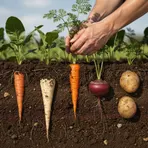
A vegetable that grows under the ground like a carrot or potato


 1
3.4
1
3.4
A plant with a large part under the ground that people eat, like a potato or carrot

A white root vegetable with smooth leaves that looks like a parsnip

A plant with smooth leaves and a large white root used as a vegetable
Surface Forms
Morphology
The meaning 'the edible root of parsley' is directly derivable from combining 'parsley' (the herb) and 'root' (underground plant organ): it simply names the root part of the parsley plant. This noun+noun compounding is a common, transparent compositional pattern (attested cross-linguistically), so a B1 learner who knows both constituents would readily understand it.
Etymology
Parsley root is named for the thick, edible root of the parsley plant. People in Central and Eastern Europe dug it up and cooked it like a carrot, so the name simply points to the 'edible root' used in cooking.