
parison


 1
9.9
- noun
- /ˈpɛrɪsən/
- Specialized
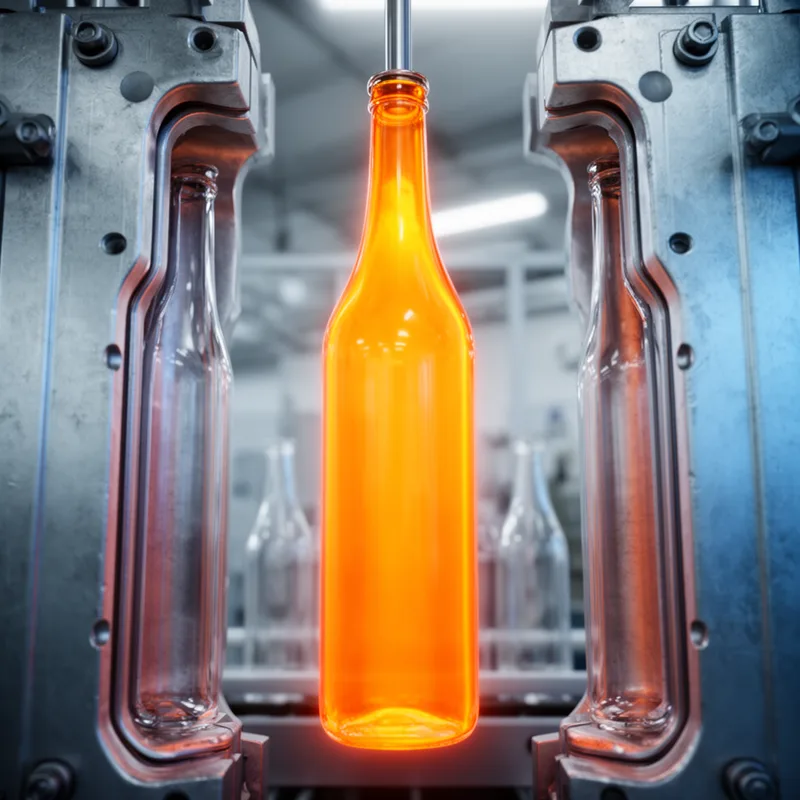
- The parison is removed and dropped into a second mold for blowing into the final shape.
- parison control
Examples
-
The molten glass is poured into the mold to create a parison that will be transformed into a bottle.
-
In both glass-molding methods, the parison is removed from the primary mold and deposited into a blow mold for finishing by air pressure.
Academic text (1995) -
Blow-and-blow uses air pressure to form the parison.
Academic text (1995) -
This is because the pressed parison shape provides better distribution of glass within the mold than the air pressure used in blow-and-blow.
Academic text (1995) -
A parison control package for blow molding includes basics that can be customized by an OEM.
Academic text (2001) -
It also features parison head control for wall thickness, screw speed control, and mold closing control, and is programmable for continuous and discontinuous operation.
Academic text (2001) -
A new parison control package for blow molding machines, according to its manufacturer, Siemens Energy and Automation Inc. of Alpharetta, Ga., represents a different approach for the company in supplying machine controls to original equipment manufacturers.
Academic text (2001) -
Plungers in the NNPB molding system are made of thermal-resistant alloys that enhance the plungers' durability and improve the forming of the parison.
Academic text (1995) -
The molding process at Wheaton begins when a gob of molten glass heated to 2200 degrees F drops into a primary metal mold that preforms the bottle into a parison, or general shape.
Academic text (1995) -
After shaping the hot glass, the factory worker ensures the parison is ready for the next stage of production.
Surface Forms
Etymology
Parison comes from an old French word for 'preparation' and from the Latin parare 'to prepare', so think of the English word prepare. A parison is the 'prepared' lump of hot glass or plastic that is ready to be blown or molded.