
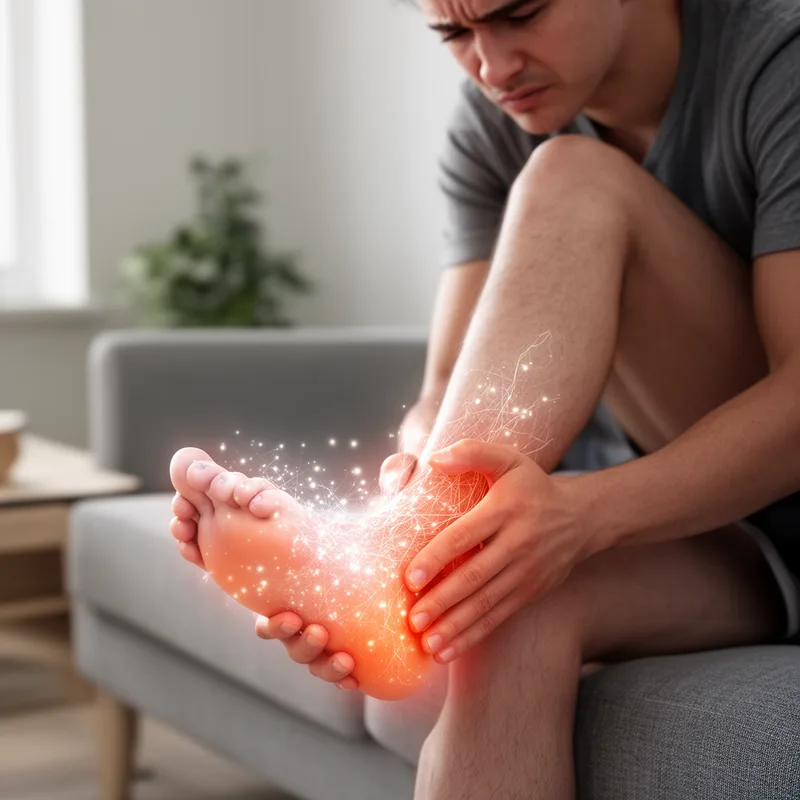
paresthesia


 1
9.9
1
9.9
- noun
- /ˌpɛrəˈsθiːə/
- Specialized
- Many clinical characteristics overlap CTS, with symptoms of numbness, paresthesia, and weakness within the median nerve distribution.
- paresthesia in the thigh
- lateral paresthesia
- pain and paresthesia
Loading YouTube…
Watch on YouTubeSo beta alanine, alanine or alanine is anyone who's taking this or some people that have taken this will have experienced some paresthesia.
- So beta alanine, alanine or alanine is anyone who's taking this or some people that have taken this will have experienced some paresthesia.
Examples
-
After the injury, she felt a strange sensation in her legs known as paresthesia, which made it difficult to walk.
-
None had corneal anesthesia, and none had postoperative paresthesia of the face.
Academic text (1996) -
Presentation included acute limb ischemia in 13 patients with pain and paresthesia.
Academic text (2007) -
The symptoms in this group ranged from sudden onset of lower extremity paresthesia to frank paraplegia.
Academic text (2007) -
Lateral thigh paresthesia is the most common complication associated with the ALT flap harvest.
Academic text (2012) -
The most common complications in the patients were: buttock pain, paravertebral muscle spasms, lower limb paresthesia, and gastrosoleus muscle pain, respectively.
Academic text (2007) -
Postoperative lateral thigh paresthesia was reported in 12 studies, and it occurred in 24.0% (75 of 313) of patients.
Academic text (2012) -
Common patient complaints include local pain caused by tissue expansion or frontal nerve compression, headache, frontal paresthesia or sensory deficit, olfactory loss, and ophthalmic disturbances.
Academic text (2005) -
Assess the six P's: pain out of proportion to the injury, pain with passive stretch of the toes, pallor, pulselessness, paresthesia, and paralysis; but take special notice of pain as it is listed first and can be the most sensitive early indicator of compromise.
Academic text (2007) -
A number of other diverse symptoms can also be seen, including dyspnea, hoarseness, hemoptysis, cranial nerve palsy, paresthesia, and epistaxis, depending on the tumor's site of origin.
Academic text (2001)
Synonyms
 26
3.3
26
3.3
A small prickly feeling on the skin often caused by excitement or cold
 22
3.4
22
3.4
A slight prickling feeling like many tiny pins touching the skin
 1
2.8
1
2.8
A tingling feeling in the skin often felt after a hand or foot falls asleep
 1
9.9
1
9.9
An unpleasant feeling like burning, tingling, or pain caused by nerve damage
How Intense
- Specialized
76
4.5
 19
4.6
19
4.6
- Specialized
1
9.9
1
2.8
22
3.4
Surface Forms
Morphology
Etymology
Paresthesia comes from Greek parts para- ('abnormal' or 'beside') and aisthesis ('sensation' or 'feeling'). So paresthesia literally means an 'abnormal sensation', which is why it describes tingling, prickling, numbness, or 'pins and needles' in the skin.