

parenterally


 1
9.9
- adverb
- /pəˈrɛntəˌrəli/
- Specialized
- In emergency situations, medications are often given parenterally to produce a rapid response.
Examples
-
The doctor decided to administer the medication parenterally for quicker absorption into the bloodstream.
-
Patients who cannot take oral medications may require treatment parenterally to ensure effectiveness.
-
In the first article in our series looking at parenterally administered medications that are given by practice nurses, we focused on the administration of some of the more commonly given drugs that are used to treat, modify, or stabilize a condition, provide replacement of lacking elements, or are given to prevent conditions.
Academic text (2012) -
Proven hypocalcemia warrants calcium gluconate infusion parenterally and frequent serum calcium monitoring.
Academic text (2015)
Synonyms
 6
6.5
A nurse puts medicine or fluid into a vein using a needle
 1
8.4
Doctors give medicine under the skin with a small needle
 1
7.5
By injection directly into a muscle
 1
9.2
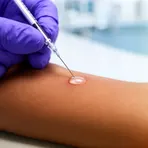
In a way that puts medicine into the skin rather than under it
 1
9.9
To inject medicine into the space inside the belly around the organs

To put medicine directly into the heart
Surface Forms
Morphology
parenterally = parenteral (opaque) = para + enter + al + ly
The adverbial -ly formation is regular, but the base adjective 'parenteral' is a specialized medical term whose meaning is not recoverable for an average learner from the visible parts alone.
Etymology
Parenterally comes from the parts para- ('beside') and enter- ('intestine'), so it literally means 'beside the intestine'. So, to give medicine parenterally is to give it by injection or drip, not 'by mouth' through the stomach and intestines.