
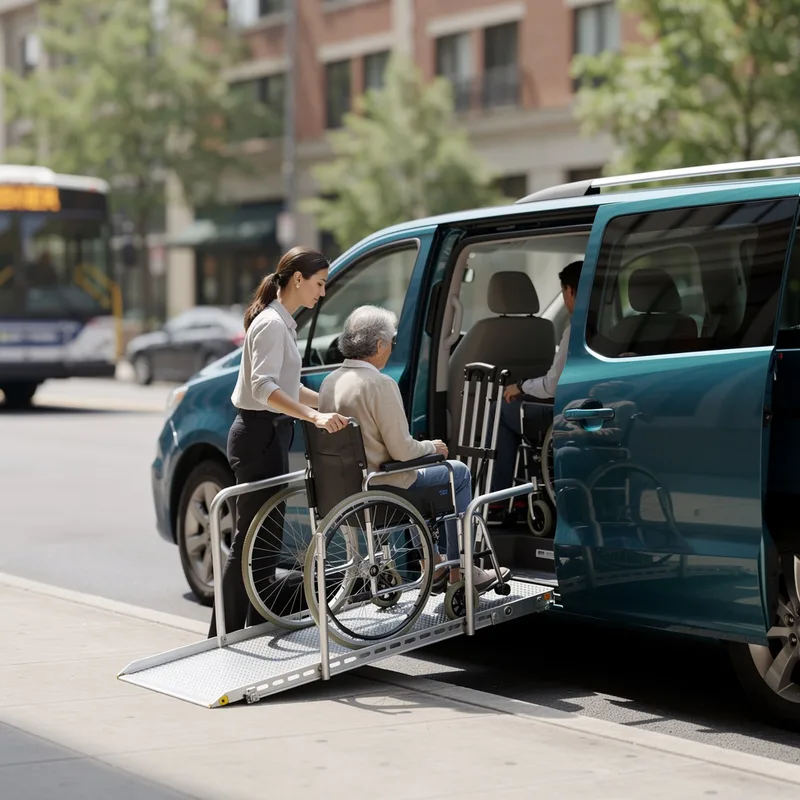
paratransit
 1
6.8

- noun
- /ˌpærəˈtrænzɪt/
- Specialized
- Some Metropolitan Planning Organizations have been doing this for years—investing in public transportation, paratransit, bicycle paths, and pedestrian facilities.
- paratransit service
- paratransit settings
Loading YouTube…
Watch on YouTubeAnd that's mostly paratransit or in demand responsive as they call APTA Factbook.
- And that's mostly paratransit or in demand responsive as they call APTA Factbook.
Examples
-
Exceptions to high-occupancy vehicle rules include commercial, emergency, and paratransit vehicles and buses.
Blog text (31) -
Thanks to paratransit, the state pays for the taxi service to the nearest city, some 30 miles distant.
Blog text (4) -
Paratransit needs to have a dedicated budget and should be a completely separate entity from regular service.
Blog text (16) -
The original paratransit plan was intended as a transitional program.
Blog text (16) -
Paratransit workers also assume considerable risk for the safety and welfare of their vulnerable clients.
Academic text (1994) -
Yet paratransit operators rarely receive systematic training or careful supervision.
Academic text (1994) -
Or she arranges for "paratransit," a bus service for riders with disabilities and their families.
Blog text (18) -
For example, in ADC and paratransit settings, negotiations about the order in which individuals get picked up on the way to the center are often complex.
Academic text (1994) -
Congregate programs like adult daycare, assisted living, and paratransit services, which support people living "independently," are examples of the increasing diversity of long-term care (LTC) settings offering additional career opportunities for paraprofessional workers.
Academic text (1994) -
The city has improved its paratransit options to ensure better access for people with disabilities.
Surface Forms
Morphology
Etymology
The word paratransit comes from para- meaning 'beside', like in parallel, and transit meaning 'travel' or 'moving from one place to another'. So paratransit is transport that runs 'alongside' regular buses and trains to help people who cannot use normal public transit.