
pappose
- adjective
- /ˈpæp.oʊs/
- Specialized
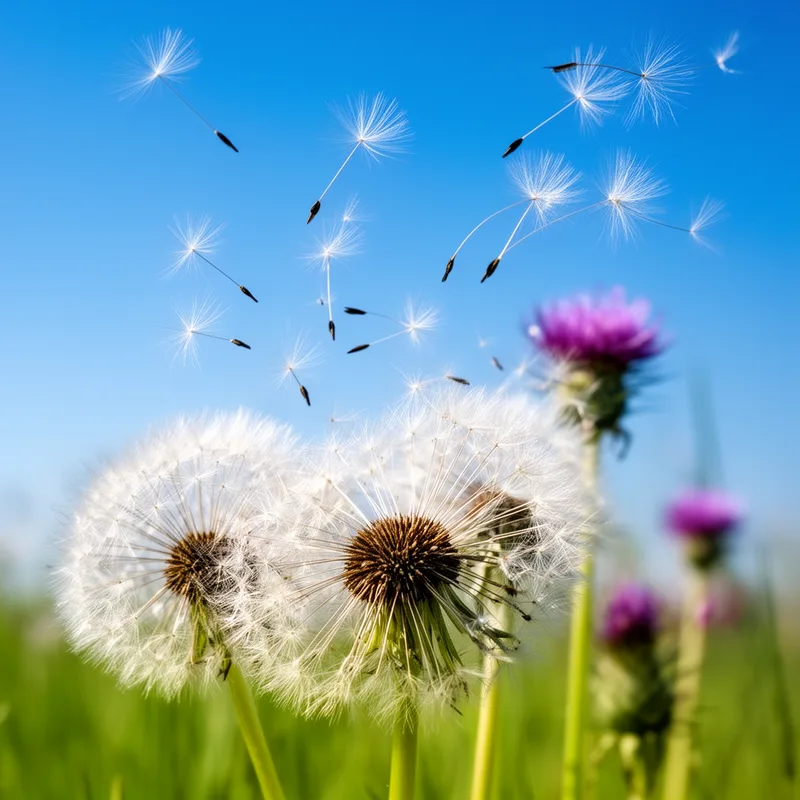
- Many thistle plants are pappose, producing seeds with feathery bristles for dispersal.
Examples
-
The dandelion’s pappose seeds are easily carried away by the wind.
-
Many plants, like thistles, produce pappose seeds.
-
The botanist noted the pappose heads of the composite flowers in her field journal.
-
The pappose seeds of the dandelion are easily carried by the wind.
-
The dandelion's pappose seeds float gently on the breeze, spreading across the garden.
-
Many thistle species are pappose, allowing their lightweight seeds to be carried far by the wind.
-
In her study, she identified several pappose flowers known for their feathery seed tufts.
Surface Forms
Morphology
Etymology
Pappose comes from the plant word pappus, which in turn comes from a Greek word pappos meaning 'old man' or 'grandfather'; imagine a tiny white beard on a seed like a dandelion. That's why pappose means having feathery bristles or tufts that help seeds travel on the wind.

