
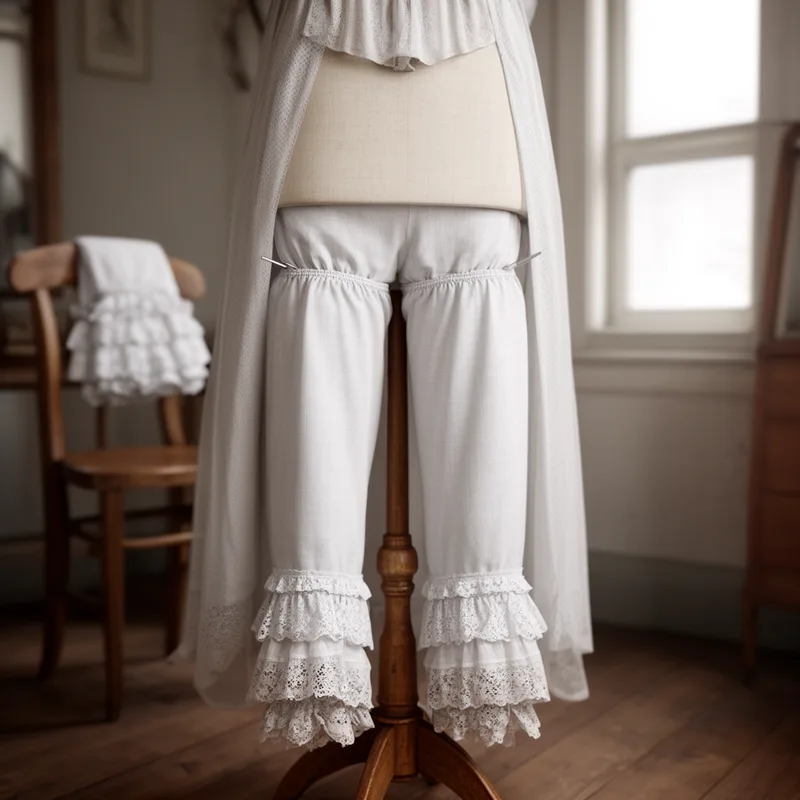
pantalette


 1
9.9
1
9.9
- noun
- /ˌpæntəˈlɛt/
- Archaic
- She admired the intricate lace trim on her pantalettes, which were a popular fashion in her family.
- chemise and pantalettes
Examples
-
The water covered only her hips, wet her pantalettes and the fringe of her chemise, but that symbolized her bewilderment.
Fiction book (1991) -
In the 19th century, young girls often wore pantalettes under their dresses for modesty.
-
With that, he slid her pantalettes down.
-
In your pantalettes, and your father after you with a paddle.
-
Her chemise and pantalettes provided inadequate cover, but she used her hands to conceal what she could.
Fiction book (1991) -
The neck of her chemise drooped; her pantalettes rode up over her knees.
Fiction book (1991) -
"There wouldn't be pantalettes hiding under those petticoats by any chance, would there?" she quizzed.
Fiction book (1990) -
Where before she felt distinctly unclothed, sitting there in her chemise and pantalettes, now she noticed she was overdressed.
Fiction book (1991) -
The faded pantalettes were part of the vintage collection displayed at the museum.
Synonyms
 20
9.9
20
9.9
Tight leg coverings like socks or stockings worn in the past
Surface Forms
Morphology
Etymology
Pantalette comes from the older word pantaloon, which was named after Pantalone, a long-legged character in old Italian theatre. A helpful way to remember it is to think of pantalette as 'small pants' — like pants made frilly and short to wear under a dress, which is why they were used as an undergarment.