
panentheism


 1
9.9
- noun
- /ˌpæn.ɛnˈθiː.ɪ.zəm/
- Specialized
- What you describe in your reference to pantheism reminds me a little bit of panentheism.
Examples
-
Panentheism cannot admit that God could have existed without a world but freely chose not to, that nature is not in itself open for grace but needs grace in order to become open, and that God's freedom excludes the idea that He exists because of any internal or external necessity.
Academic text (1990) -
This issue, perhaps more than any other, brings out the radical difference between Whitehead's panentheism and Steiner's pantheism.
Academic text (1991) -
For practitioners of panentheism, progress in the practice of brahmacharya is the most practical way to love all humanity and not objectify anybody for self-gratification.
Blog text (24) -
Christian panentheism started from the divine essence: creation is a fruit of God's longing for his Other and for that Other's free response to the divine love.
Academic text (1990) -
For Moltmann, this process is both possible and necessary because his theological starting point is a version of panentheism, which maintains that we cannot cling to any distinction between the immanent and the economic Trinity.
Academic text (1990) -
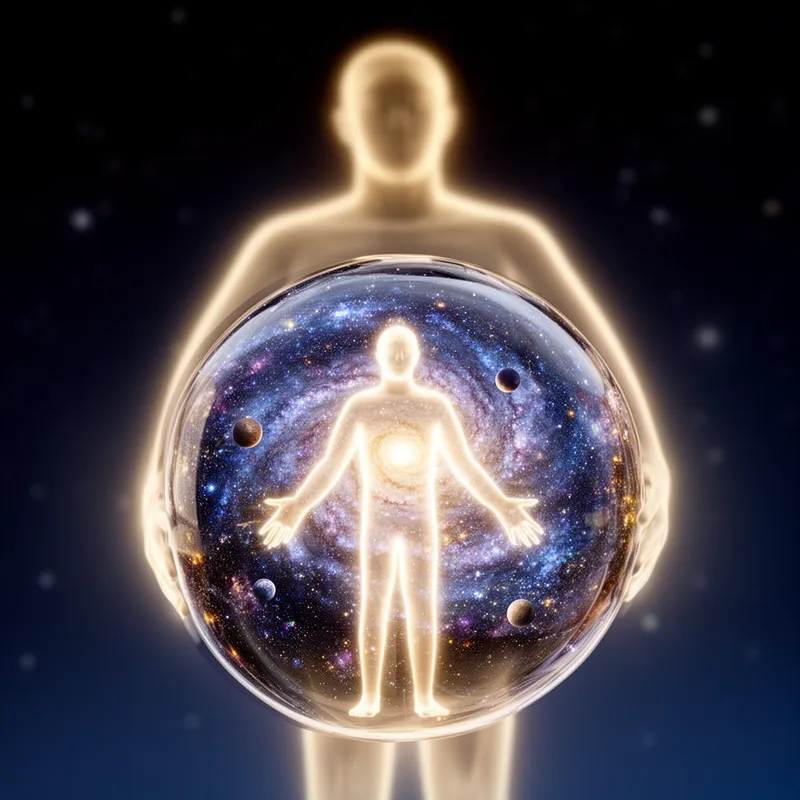
In panentheism, God transcends the universe while still being present in all of creation.
-
Many philosophers discuss panentheism as a way to reconcile religion with modern science.
-
Panentheism teaches that God is both part of the universe and greater than it.
Surface Forms
Morphology
Etymology
Panentheism comes from Greek parts pan- 'all', en- 'in', and theos 'god', the pan- like in panorama and the theos like in theology. So, panentheism is the belief that God is 'in all' the universe but also greater than and beyond it.