

palmyra palm
- noun
- The palmyra palm is widely cultivated for its sweet sap, which is harvested to make palm wine.
Examples
-
Many rural homes are roofed with leaves from the palmyra palm.
-
Carpenters highly value the hard, durable wood of the palmyra palm for construction.
-
The palmyra palm can grow up to 30 meters tall.
-
Many villages in India use palmyra palms for thatching roofs.
-
Carpenters highly value the hard, durable wood of the palmyra palm for construction.
-
Many rural homes are roofed with leaves from the palmyra palm.
-
The palmyra palm is widely cultivated for its sweet sap, which is harvested to make palm wine.
Synonyms

A tall fan palm from Africa, India and Malaysia that gives hard wood, sweet sap, and leaves for weaving

A tall palm tree with fan-shaped leaves that provides hard wood, sweet sap, and weaving material

A tall tropical palm tree that gives hard wood, sweet sap for sugar, and leaves for weaving
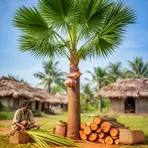
A tall fan palm that gives hard wood, sweet sap, and leaves for weaving

A group of tall palm trees from tropical Africa and Asia with fan-shaped leaves and edible fruit

A tall palm tree found in tropical regions such as Africa and Asia

A tall palm tree whose sweet liquid people make into a drink and sugar

A tall tree that gives sweet sap used to make palm wine or sugar
Surface Forms
Morphology
Both constituents individually denote the same semantic field: 'palmyra' names a particular palm and 'palm' denotes the tree class, so the compound simply identifies a palm of the palmyra type. This species‑type composition is fully compositional and follows common noun + noun naming patterns, making it immediately understandable to a learner who knows both words.
Etymology
Palmyra palm may come from old South Asian words for this tall tree, often called palmyra locally because of its fan-shaped leaves. People used its hard wood, leaves for roofs, and sweet sap for drinks, so the name came to mean this useful 'palm' today.

