

palm family
- noun
- /pɑlm ˈfæmɪli/
- Specialized
- The palm family includes many well-known plants, such as coconuts and date palms.
Examples
-
Many species in the palm family are vital to tropical ecosystems and local economies.
-
Botanists study the characteristics that distinguish the palm family from other plant families.
-
The palm family includes many species found in tropical regions.
-
Many plants in the palm family thrive in sandy soils.
-
The palm family consists of a variety of tropical plants that are recognized for their tall trunks and large leaves.
-
Cultivating species from the palm family can greatly enhance the biodiversity of tropical gardens.
-
The palm family plays a crucial role in providing food and habitat for many animals in tropical ecosystems.
Synonyms
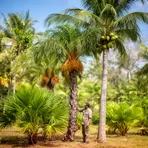
A group of tropical trees and shrubs that includes palm trees

A group of tropical trees and plants with tall trunks and big leaves like coconut and date palms

A group of tropical plants like coconut or date palms with tall trunks and large leaves

A group of tropical trees and plants like coconut and date palms

A group of plants that includes all palm trees like coconut palms
Surface Forms
Morphology
The meaning 'the family (taxonomic group) of palm plants' is directly and compositionally derived from 'palm' (a type of tropical tree) + 'family' (a grouping of related species). This noun–noun combination follows a common, cross-linguistic compositional pattern, so a B1 learner who knows both words will readily infer the MWE's meaning.
Etymology
Palm family comes from the common word palm, meaning the tall trees with big leaves, and the word family, meaning a 'group' of related plants. So it means the group of plants that includes coconuts and date palms.

