

paleozoology
- noun
- /ˌpeɪliəʊˈzoʊələdʒi/
- Specialized
- She decided to specialize in paleozoology after discovering her interest in prehistoric animals.
Examples
-
The study of paleozoology reveals much about ancient ecosystems.
-
The museum's exhibit on ancient mammals was curated by an expert in paleozoology.
-
Research in paleozoology helps scientists understand the evolution of animal species.
-
Many universities offer courses in paleozoology.
-
Research in paleozoology helps scientists understand the evolution of fossil animals.
-
She decided to specialize in paleozoology after discovering her passion for studying prehistoric creatures.
-
The museum's exhibit on ancient fossil species was curated by a leading expert in paleozoology.
Synonyms

 13
7.5
13
7.5

The study of fossils and ancient animals and plants preserved in rocks
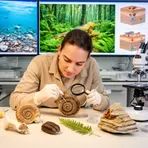
The study of fossils to learn about ancient life and environments
Surface Forms
Morphology
paleozoology = zoology (transparent) = paleo + zoo + logy
The word is built straightforwardly from paleo- 'ancient/fossil' plus zoology, so its meaning 'study of fossil animals' is largely compositional.
Etymology
Paleozoology breaks into three parts: paleo- meaning 'old' or 'ancient', zoo meaning 'animal' as in 'zoo', and -logy meaning 'study' as in 'biology'. So, paleozoology is the 'study of ancient animals'.