
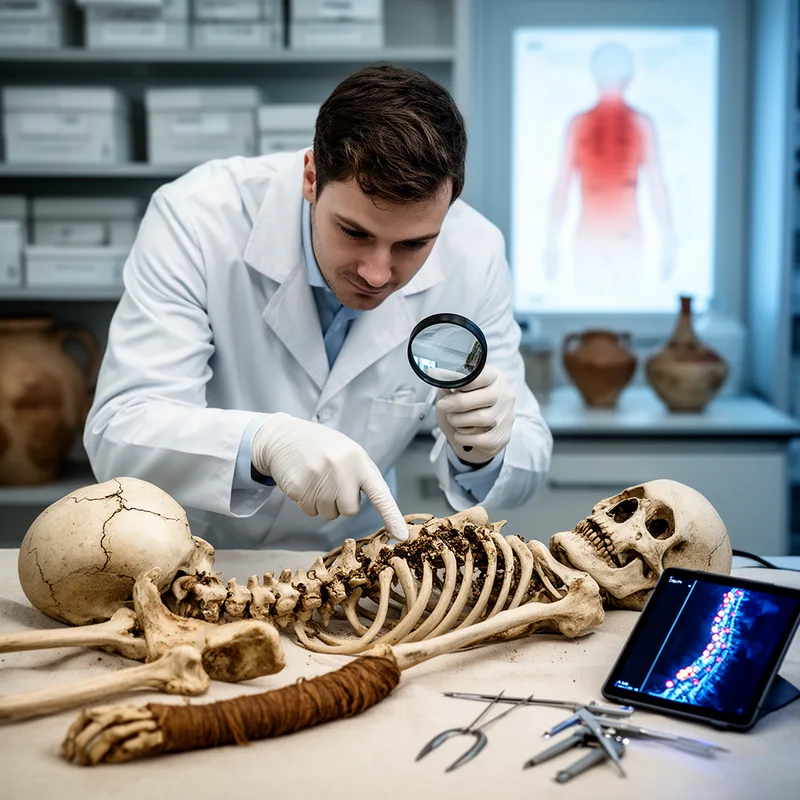
paleopathology


 1
9.9
A study of ancient diseases in bones or mummies
- noun
- /ˌpeɪliəʊpəˈθɒlədʒi/
- Specialized
:
paleopatología
- On paleodemography, paleopathology, and skeletal population studies fueling research.
Examples
-
The scientist presented her groundbreaking research on paleopathology, revealing insights into the diseases that affected ancient civilizations.
-
In his lecture, the professor explained the methods used in paleopathology to analyze skeletal remains from archaeological sites.
-
Through paleopathology, researchers are able to understand how diseases evolved over time by studying mummified bodies from ancient Egypt.
Surface Forms
paleopathology singular
paleopathologies plural
Morphology
Etymology
Paleopathology breaks into three parts: paleo- 'ancient', patho- 'disease', and -logy 'study', the same pieces you see in paleontology, pathology, and biology. So, paleopathology is the 'study of ancient disease', which is why scientists look at old bones and mummies for signs of illness.