
paleomagnetic


 1
9.9
- adjective
- /ˌpeɪliˈoʊmæɡnɛtɪk/
- Specialized
- The new techniques in paleomagnetic dating allow scientists to uncover the Earth's magnetic history.
Examples
-
The new species was not only smaller but also more ancient, coming from sediments that have been dated (by paleomagnetic reversals) to about 6.3 million years ago.
Academic text (1991) -
This theory was either ignored or ridiculed for half a century until eventually confirmed by paleomagnetic research during the late 1950s and early 1960s.
Blog text (20) -
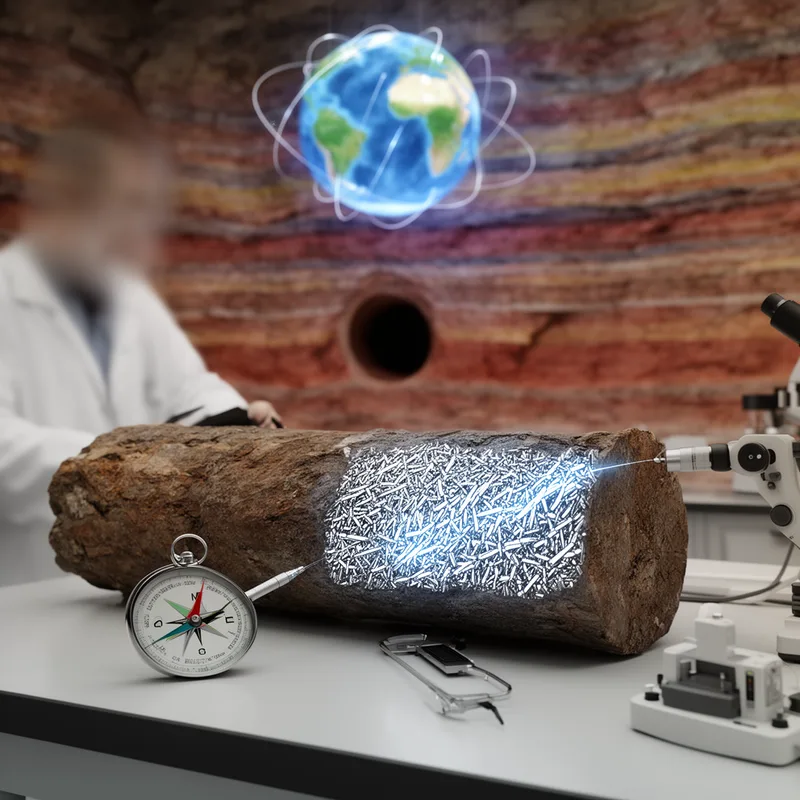
Evidence came from a technique called paleomagnetic dating: When lava cools and hardens, iron-rich minerals permanently point like frozen compass needles toward the Earth's magnetic poles.
Academic text (2004) -
Researchers analyzed rocks for paleomagnetic properties to understand tectonic plate movements.
-
Many studies rely on paleomagnetic data to determine the age of ancient geological formations.
Surface Forms
Morphology
Etymology
Paleomagnetic starts with paleo- meaning 'ancient' and ends with magnetic from magnet meaning 'related to a magnet'. So paleomagnetic is about the 'ancient magnetism' kept in rocks, which is why scientists use it to learn about Earth's past magnetic field and how continents moved.