
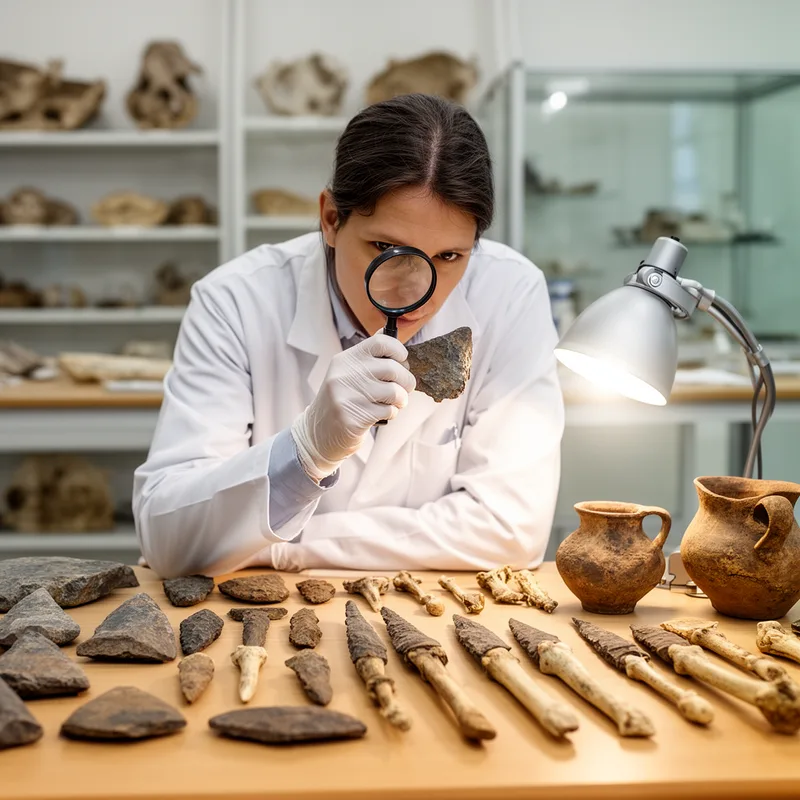
paleology
- noun
- /ˌpeɪliˈɑːdʒi/
- Specialized
- Studying paleology allows researchers to understand the tools and habits of ancient civilizations.
Examples
-
As an expert in paleology, she often attends conferences to discuss discoveries from the prehistoric era.
-
The museum's exhibit featured various paleology findings that shed light on early human life.
-
Also, as to precedent, I keep hearing people speak of precedent and then offer into evidence hearsay and speculation, narrow regional histories, or ambiguously interpreted paleologies.
Blog text (10)
Synonyms
 4
3.7
4
3.7

The study of human history by digging up and examining old objects and buildings

A study of very old human tools, bones, and how people lived before writing
Surface Forms
Morphology
paleology = paleo + logy
The word is transparently built from the combining form paleo- 'ancient' and the suffix -logy 'study', yielding 'study of ancient things'.
Etymology
Paleology comes from two Greek parts: paleo- meaning 'old' and -logy meaning 'study', as in paleontology. So, paleology is the 'study of old things', especially ancient objects and artifacts from very early human times.