
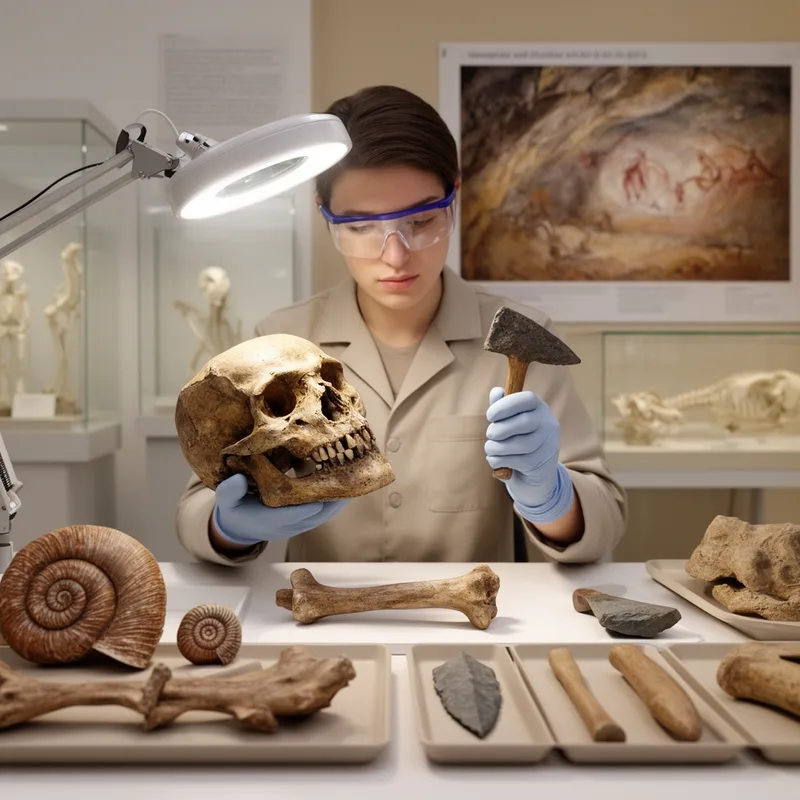
paleological
- adjective
- /ˌpeɪliəˈlɒdʒɪkəl/
- Specialized
- Researchers are studying paleological evidence to understand how climate change affected prehistoric life.
Examples
-
Several geomorphic constraints in the geomorphic-trophic hypothesis limit fish distribution: extant and paleological gradients of stream outflow, connection to deep overwintering lakes through the stream network, and lake depth and area.
Academic text (1999) -
The museum's new exhibit features paleological artifacts that provide insights into ancient civilizations.
-
Paleological gradients of outflow streams.
Academic text (1999) -
The observation that a group of very high gradient lakes in the region, the Fog Lakes, contains arctic char and sculpin led to the inclusion of the paleological landscape setting in the geomorphic-trophic hypothesis.
Academic text (1999) -
Lake trout are absent from lakes that do not occur in drainages (either current or paleological) containing a large lake (more than 400,000 m²).
Academic text (1999) -
She specializes in paleological research, focusing on fossils from the Jurassic period.
Synonyms

 47
5.2
47
5.2

From the time before people wrote things down
 3
8.2
3
8.2
Relating to the study of ancient life from fossils
 2
6.3
2
6.3
Relating to the study of past human life by digging up old objects


 1
6.9
1
6.9
A time before people wrote things down
Relating to the study of people who lived long ago by digging up old objects
Surface Forms
Morphology
Etymology
Paleological comes from the part paleo- meaning 'ancient' and the part -logical meaning 'study'. You can see the same paleo- in Paleolithic and paleontology, which both talk about very old times. So, paleological is used for things that relate to the study of ancient or prehistoric times.