
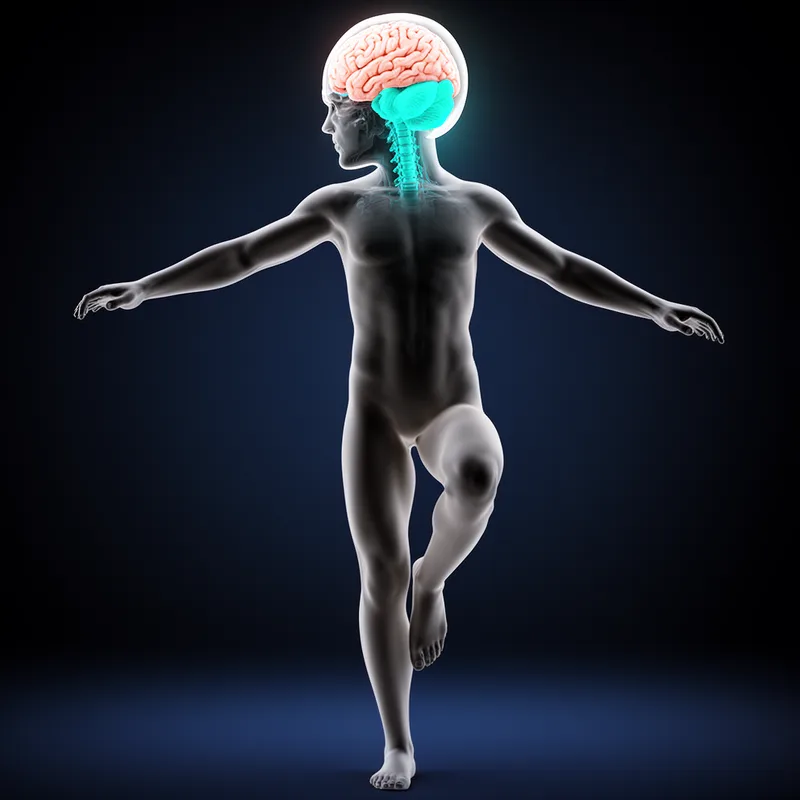
paleocerebellum
- noun
- /ˌpeɪliˈoʊsɛrəˌbɛləm/
- Specialized
- Damage to the paleocerebellum can result in muscle tone abnormalities and coordination issues.
Examples
-
Researchers are investigating the role of the paleocerebellum in both sensory and motor functions.
-
Comparative studies show that the paleocerebellum is highly conserved across many mammalian species.
-
The paleocerebellum is essential for motor control.
-
The paleocerebellum evolved early in mammalian history.
-
Comparative studies show that the paleocerebellum is highly conserved across many mammalian species.
-
Damage to the paleocerebellum can result in muscle tone abnormalities and coordination issues.
-
Researchers are investigating the role of the paleocerebellum in both sensory and motor functions.
Surface Forms
Morphology
paleocerebellum = cerebellum (semi-transparent) = paleo + cerebellum
Formally analyzable as 'paleo-' (ancient) + 'cerebellum', but 'paleo-' is a specialized combining form unlikely to be known to average learners.
Etymology
Paleocerebellum combines the parts paleo- meaning 'old' and cerebellum meaning 'little brain', literally 'the old little brain'. So the paleocerebellum is the older part of the small brain at the back that controls basic balance and movement.

