
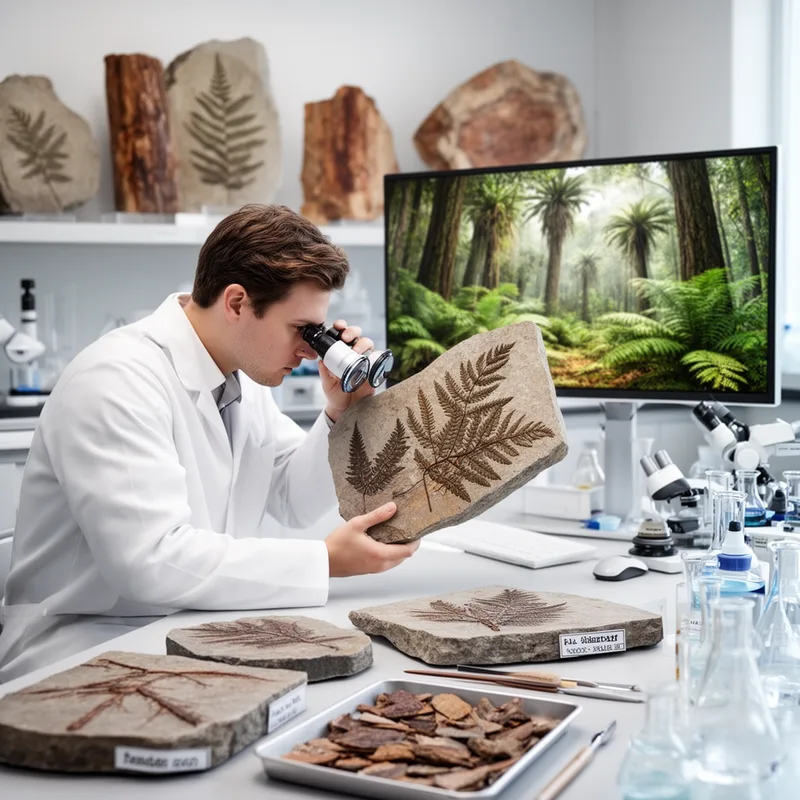
paleobotany
- noun
- /ˌpeɪliˈoʊˌbɑːtəni/
- Specialized
- Researchers in paleobotany have discovered new species of ferns that thrived millions of years ago.
Examples
-
The field of paleobotany offers vital clues about Earth's ancient climates through the study of fossilized plants.
-
By the time excavation began in August 1998, our team included researchers from Kazakhstan, France, Italy, Belgium, and Russia working in fields as varied as geomorphology, paleobotany, and dendrochronology.
Academic text (2002) -
The data from paleoclimatology, including ice cores, sea sediments, geology, paleobotany, and zoology, indicate we are now on the brink of another ice age, and the data also show that severe and lasting climate change can occur within a few years.
Blog text (16) -
His passion for paleobotany led him to explore many fossil sites around the world.
Surface Forms
Morphology
Etymology
The word paleobotany comes from paleo- meaning 'ancient' and botany meaning 'study of plants'. So, paleobotany is the study of ancient or fossil plants.

