
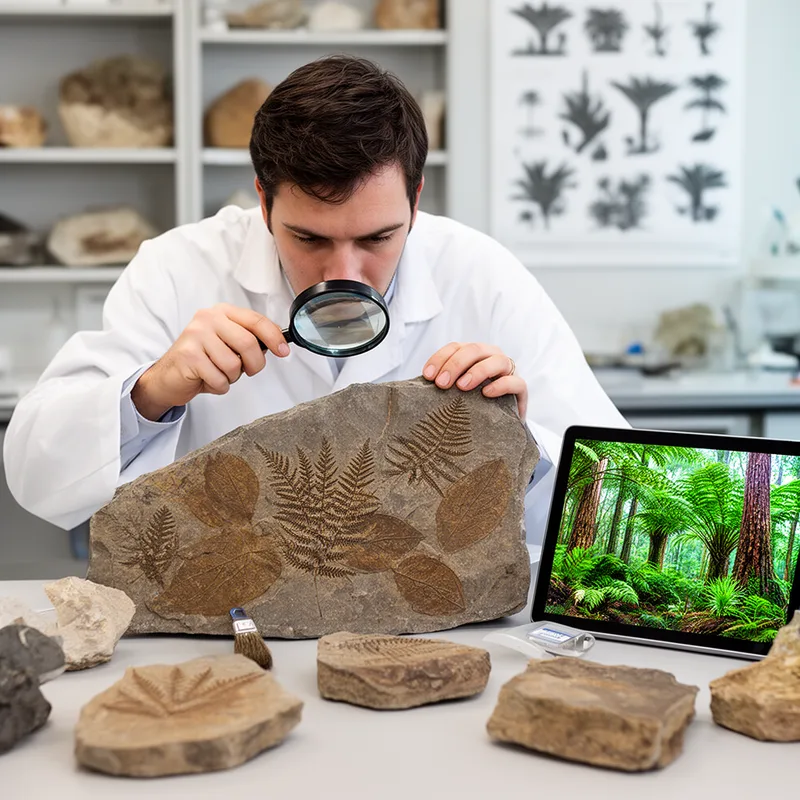
paleobotanical


 1
9.7
- adjective
- /ˌpeɪliəʊbəˈtænɪkəl/
- Specialized
Examples
-
There are strenuous arguments against such evolutionary allegiances based on paleobotanical, anatomical, morphological, and molecular evidence (Pryer et al. 2001).
Academic text (2002) -
The scientist presented her findings from the paleobotanical research she conducted on ancient forest ecosystems.
-
In the museum, the paleobotanical exhibit showcases fossils of prehistoric plants that thrived millions of years ago.
-
Students studying paleobotanical methods learn how to analyze fossils to understand past climate conditions.
Surface Forms
Morphology
paleobotanical = paleobotany (transparent) = paleo + botany + ical
Formed by a standard adjectival derivation from 'paleobotany' using '-ical', so the adjective meaning is directly predictable from the noun.
Etymology
Paleobotanical combines the prefix paleo- meaning 'ancient' and botanical from botany meaning 'plants'. So paleobotanical work is the study of 'ancient plants', like plant fossils and old vegetation.