
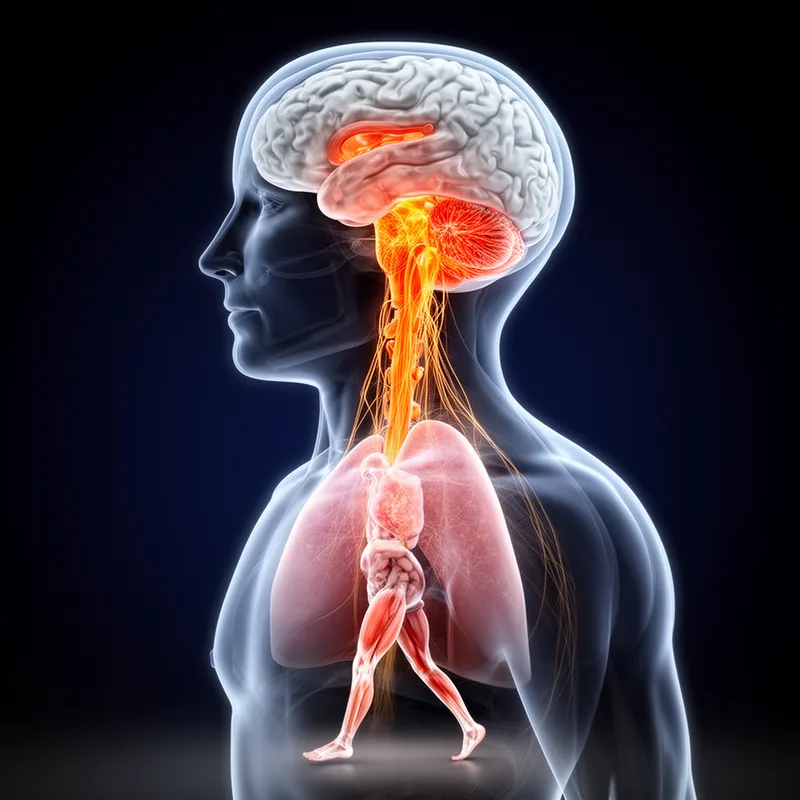
paleencephalon
- noun
- /ˌpeɪliˈɛnsefəˌlɒn/
- Specialized
- In humans, the paleencephalon includes the brainstem and basal ganglia.
Examples
-
The paleencephalon controls many basic survival functions that are present in all vertebrates.
-
Unlike the neocortex, the paleencephalon is responsible for instinctive behaviors.
-
Research on the paleencephalon has helped scientists understand the evolution of the nervous system.
-
The paleencephalon plays a crucial role in regulating basic bodily functions.
-
The paleencephalon plays a crucial role in regulating basic bodily functions.
-
In humans, the paleencephalon includes the brainstem and basal ganglia.
-
The paleencephalon controls many basic survival functions that are present in all vertebrates.
Synonyms
Older parts of the brain that control basic life functions and instincts
Surface Forms
Morphology
paleencephalon = encephalon (opaque) = pale + encephalon
The elements are specialized anatomical combining forms and the prefix 'pale' here is not a productive, easily recognized English prefix for most learners.
Etymology
The word paleencephalon comes from the parts paleo- meaning 'old' and -encephalon meaning 'brain', the same paleo- you see in paleontology. So, it literally means 'old brain', and it refers to the oldest, basic parts of the brain that control survival and instinctive behavior.

