
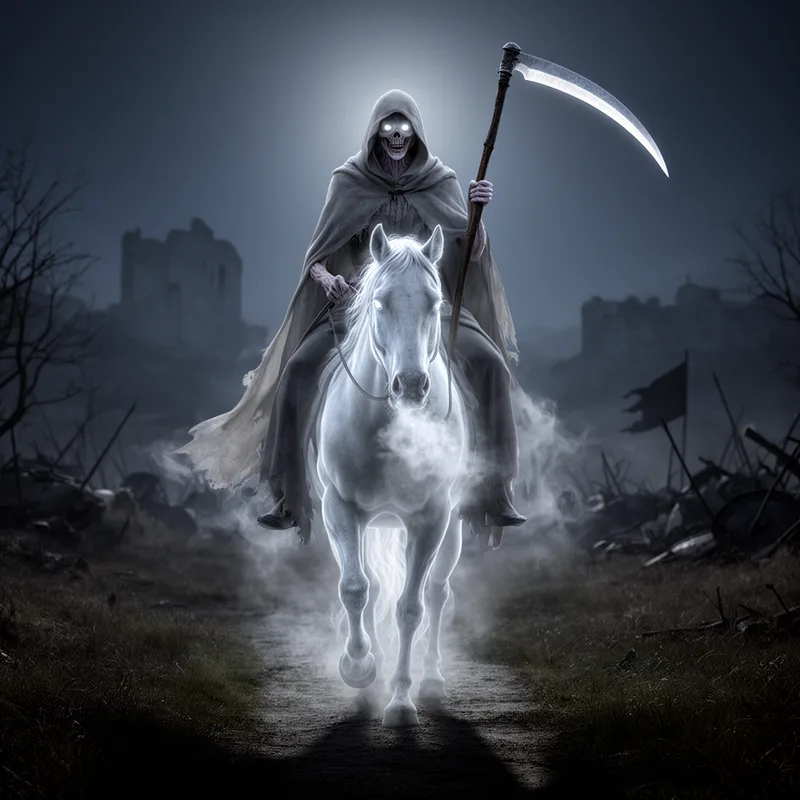
pale rider
- noun
- Literature
- At the edge of the graveyard, townsfolk whispered about the pale rider who had appeared in their dreams, a warning of impending doom.
Examples
-
Molly held her breath as the horse's pale rider removed his three-cornered hat and nodded at her.
Fiction book (1998) -
In the old legend, the pale rider galloped through the mist, foreshadowing tragedy for those who glimpsed him.
-
As the storm rolled in, she felt an eerie chill, as though the pale rider of death was watching from the shadows.
Synonyms

 52
9.9
52
9.9

A figure who takes the souls of dead people, shown as an old man or skeleton with a scythe
 18
9.9
18
9.9
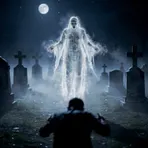
A pale ghost that appears near a person's death
 11
7.6
11
7.6
A figure who represents death, shown as a skeleton with a scythe
Surface Forms
Morphology
Literally, 'pale rider' is compositional — a rider who is pale — so a learner who knows 'pale' and 'rider' can form a basic literal image. However, the idiomatic meaning as a symbolic figure of death/doom depends on cultural or biblical knowledge (the Four Horsemen) and is not directly predictable from the words alone, so full comprehension at B1 is unlikely without prior exposure.
Etymology
The name pale rider comes from old stories of a ghostly rider on a very pale horse. One popular story says this pale rider was a sign of 'death' or bad times, so today the phrase means a figure of doom or 'death'.