

palanquin
 1
9.9
1
9.9

- noun
- /ˈpælənˌkin/
- Archaic
- Other high-ranking Merina are being carried on palanquins and escorted by horses
Examples
-
The prince is on horseback and the princess is being carried on a palanquin (filanjana) under an umbrella.
Academic text (2005) -
Underneath the viewing stand, a palanquin was parked, and a portable bath and privy were erected.
Fiction book (1996) -
There is a palanquin... such as the great sheiks use to carry their women.
-
A crude mountain palanquin, with only a red cloth stretched around it, was trundled towards the sacred grove of the local shrine.
Fiction book (2002) -
There, visitors climb a set of steps hemmed in tightly by hawkers and souvenir stands, or they can be carried up on a palanquin.
Academic text (2007) -
In his study of monastic life in South India, Yocum describes a special ten-day guru-puja celebration, during which the guru is first processed through the streets in a palanquin and then returned to the monastery.
Academic text (2008) -
The Empress sat inside the covered palanquin, her form obscured by the green veils hanging down from its roof.
-
Behind the first flood of soldiers came a troop of bearers carrying a double palanquin for the dignitaries.
-
When all is ready, several men hoist the noblewoman onto a richly decorated palanquin for her procession.
Synonyms
 5
9.9
5
9.9
A chair or bed carried on poles to move a person
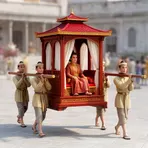
A covered seat for one person carried by people on long poles
How Elaborate
- Archaic
1
9.9

- Archaic
- Archaic
1
9.9
- Specialized
53
3.1
Surface Forms
Etymology
Palanquin comes from an Indian word like palki or palanki that meant 'litter' or 'bed', and it reached English through European travel and trade. Think of a small covered bed carried on poles by several people — that picture explains why palanquin means a covered chair or litter carried by others.