
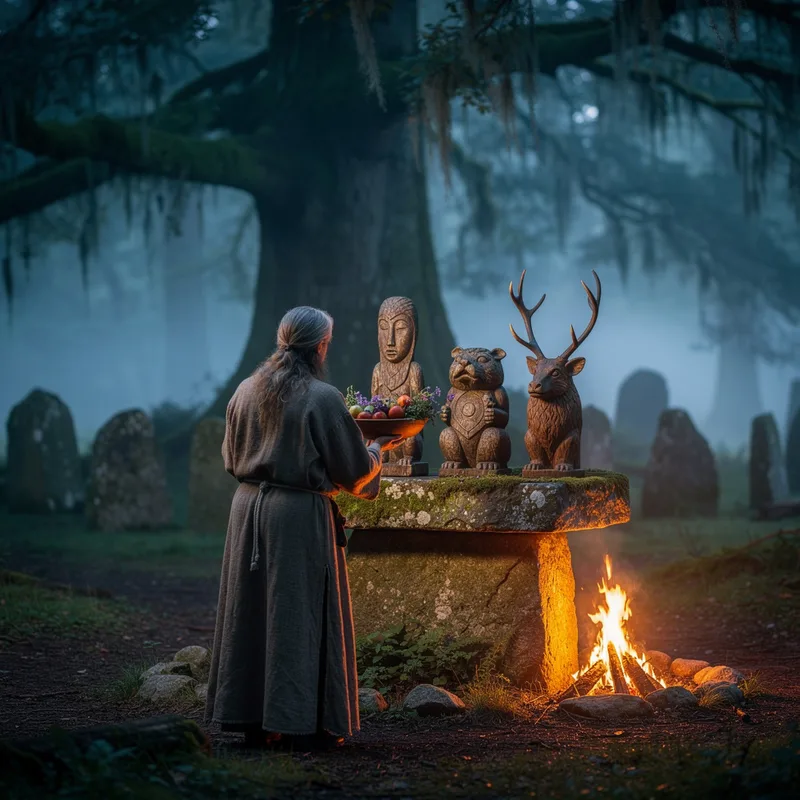
pagan
 43
7.5
43
7.5

- adjective
- /ˈpeɪɡən/
- Indeed, this text was written precisely for the converted of the pagan world in the Roman Empire.
- a pagan religion
- pagan gods
- pagan traditions
Loading YouTube…
Watch on YouTubeBoethius is also very important, or some of those earlier Pagan authors too, right?
- Boethius is also very important, or some of those earlier Pagan authors too, right?
- It's about asserting Christian beliefs and subsuming those Pagan nature worshippers.
- But anyways, you asked about Pagan holidays.
- Help me understand your mom was like Pagan.
- I was just saying that I understand that witchcraft isn't like witchcraft, that it's just like a Pagan holiday.
- And Christians made the Haj pilgrimage to Mecca alongside the Pagan Arabs in in before the coming of Islam.
- And Christianity was created overwhelmingly by by the Pagan Rome, the Roman Empire, what was left of it?
- Udu Salki are water spirits or Meadow spirits that again, like a lot of like actually like a lot of Pagan stuff that shows up in Tolkien.
Examples
-
From that point on, the two worlds, pagan and Christian, were delimited and incompatible.
Academic text (2008) -
They either had to give up their religion or convert to some other Pagan religion.
-
To me it's a pagan temple.
-
There were, of course, "ways of getting married" according to pagan, Jewish, or Christian custom.
Academic text (2008) -
But anyways, you asked about Pagan holidays.
-
Boethius is also very important, or some of those earlier Pagan authors too, right?
-
It's a symbol associated with the worship of a pagan deity.
-
Democracy is viewed as an alien product belonging to a pagan society: Ancient Greece.
Academic text (1996) -
Forsake forever the pagan mysteries, the superstitions of the past.
-
The ancient Greeks practiced many pagan rituals to honor their gods.
Synonyms
 10
8.0
10
8.0
Not believing in the God of Christianity, Judaism, or Islam
 1
6.8
1
6.8
Believing in many gods

Having religious customs not part of Christianity, Judaism, or Islam
Antonyms

Compounds
 1
6.7
1
6.7
A celebration from old religions before Christianity that marks seasonal events with dancing or bonfires

 1
7.4
1
7.4
Beliefs and customs from older religions not part of the main world faiths, often with many gods

Surface Forms
Etymology
Pagan comes from the Latin word paganus, which meant 'country dweller'. Because towns became Christian first, people in the countryside often kept older beliefs, so pagan came to mean 'not part of the main religions'.