
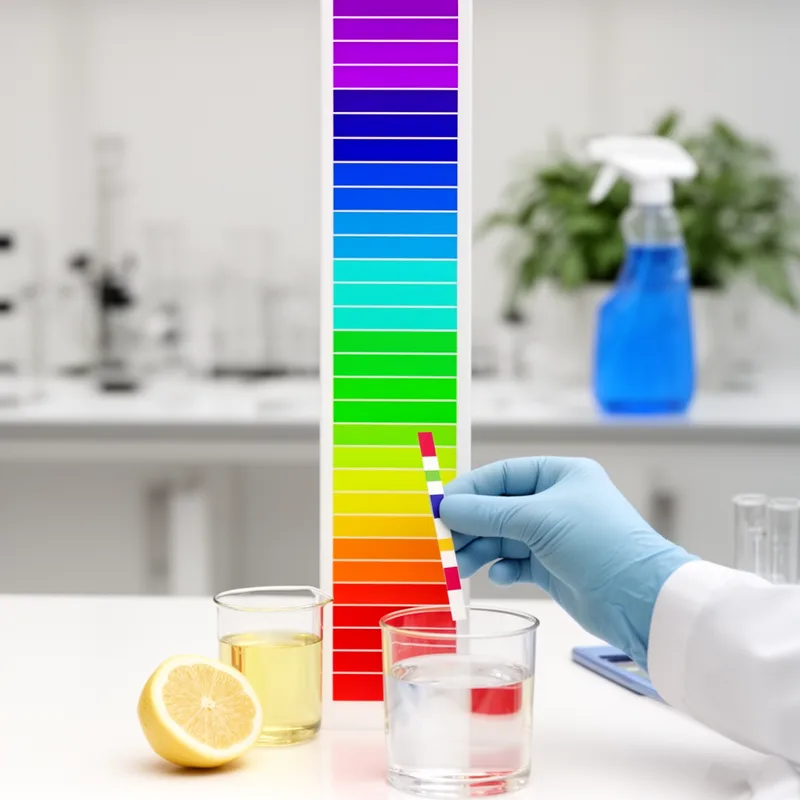
pH scale
- noun
- /piː eɪtʃ skeɪl/
- Specialized
- But given the acidity range of the various available vinegars and comparing that to the range of "acid rain," as seen on the pH scale I linked to, it's clear we already have rain with the pH of vinegar.
- the pH scale is logarithmic
Examples
-
Chemists often refer to the pH scale to determine whether a solution is neutral, acidic, or basic.
-
So here on the pH scale over here and on the other side, it has hydronium ion concentrations.
-
With the logarithmic nature of the pH scale, that's around 320 times the acidity from a CO2 atmospheric concentration more than 25 times current.
Blog text (33) -
The pH scale indicates that a solution with a value of 3 is acidic.
-
Each number on the pH scale represents the acidity or alkalinity of a solution, with 7 being neutral.
Synonyms
 738
4.0
738
4.0

A number from 0 to 14 that shows how acidic or basic a liquid is
Antonyms



Surface Forms
Morphology
The phrase is a straightforward noun–noun composition: 'pH' denotes a measure of acidity/alkalinity and 'scale' denotes a measurement range, so 'pH scale' directly means the measurement scale for pH. This combinatory pattern is literal and follows common compounding conventions, so a B1 learner who knows both constituents should be able to infer the meaning.
Etymology
The name pH scale may come from the phrase 'power of hydrogen': the 'H' stands for hydrogen and the scale measures how much hydrogen is in a liquid. Think of it as a simple number line from 0, very acidic, to 14, very basic, with 7 meaning 'neutral', so the scale shows how 'acidic' or 'basic' a liquid is.